
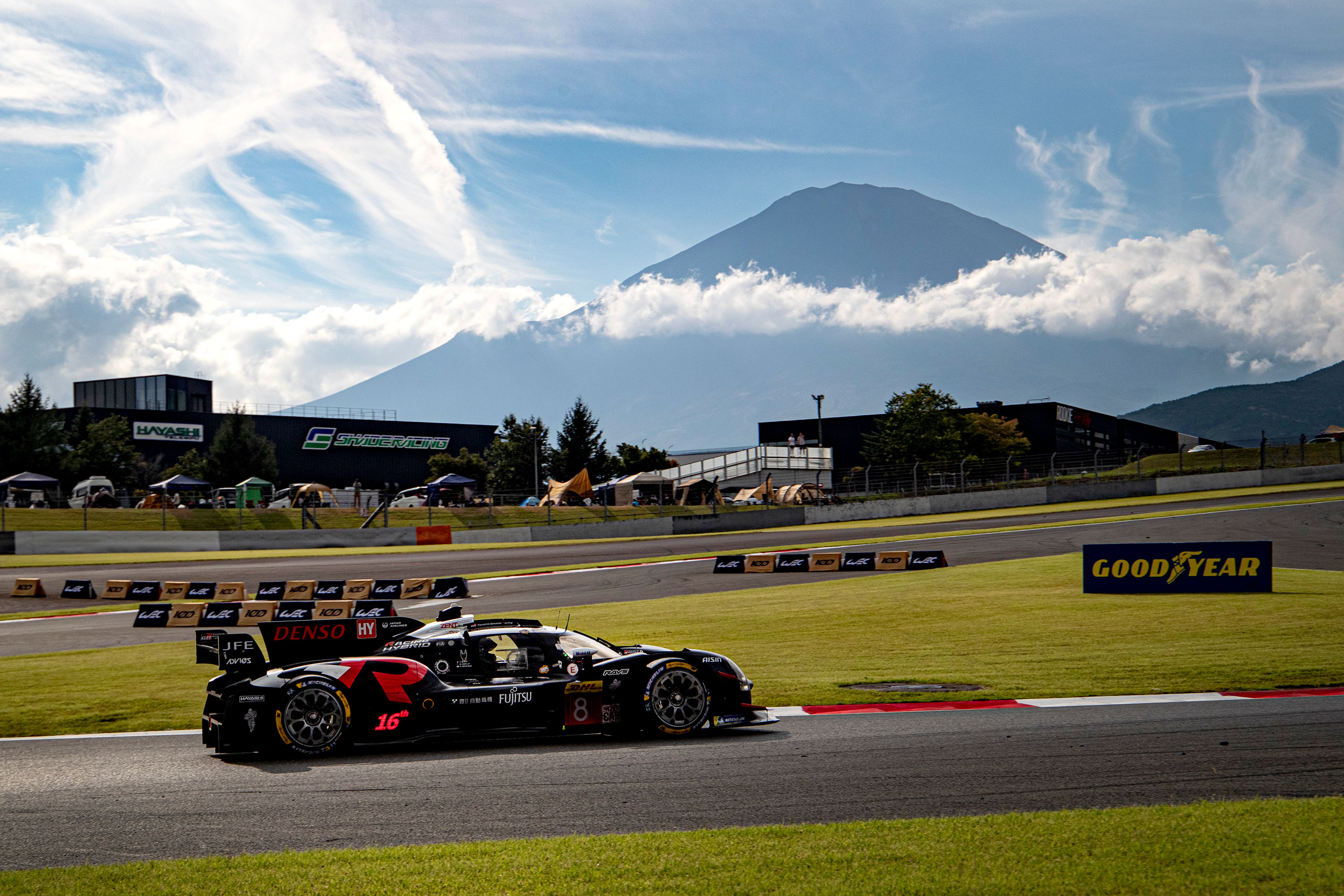
As September comes to a close, the FIA World Endurance Championship (WEC) arrives at Fuji Speedway in Japan for Round 6 of the 2026 season. As the third-to-last round of the calendar, the 6 Hours of Fuji acts as a critical junction in the title fight. The dramatic backdrop of Mount Fuji will see teams fighting for valuable points from Friday 25th to Sunday 27th of September.
Championship Standings
With just a handful of races remaining, the pressure in both the Hypercar and LMGT3 classes is reaching a boiling point.
Hypercar
Despite the heartbreak in Austin, Toyota Gazoo Racing continues to lead the Manufacturers’ standings with 140 points, closely followed by BMW (131 points) and Ferrari (114 points). In the Drivers’ Championship, the battle is closer than ever: BMW’s duo of Robin Frijns and René Rast and Toyota’s Mike Conway, Kamui Kobayashi, and Nyck de Vries, all stand at 75 points at the top of the leaderboard.
LMGT3
TF Sport currently leads the LMGT3 team standings, powered by the strong performances of Jonny Edgar, Nicky Catsburg, and Ben Keating, who are the top three in the drivers’ championship as well. Their primary opposition comes from Vista AF Corse’s #21 Ferrari and the Manthey-run #92 Porsche 911 entries.

Circuit History
Opened in 1965, Fuji Speedway boasts a rich history deeply woven into Japanese motorsport culture. The track was originally designed as a high-speed banked oval inspired by American superspeedways, and later modified into a road course after safety concerns over its incredibly challenging 30-degree banked Daiichi corner.
Fuji hosted the first ever Formula 1 Japanese Grand Prix in 1976, remembered as the championship decider between James Hunt and Niki Lauda. In 2005, Hermann Tilke redesigned the track into its current 16-turn configuration, keeping the iconic main straight while adding run-off areas and a very technical final sector. The Speedway has been a staple of the WEC calendar since 2012, hosting the 6 Hours of Fuji and also serving as Toyota’s primary testing venue.

Track Guide

The first sector of the track sees a heavy deceleration coming into Turn 1 off the 1.475 km main straight at over 300 km/h. As they brake, drivers scrub off over 200 km/h to enter a tight, heavily downhill right-hand hairpin, making it a prime overtaking spot on the circuit. Turns 2 and 3 require discipline, as too much speed might push cars to the exit kerb, ruining the setup into Sector 2.
Sector 2 and 3 are a strong mix of brutal lateral Gs on flat out corners, and more tight hairpins. Absolute precision is paramount, as the drivers move across sharp hairpins, the high-speed turns, and a series of flowing turns before launching onto the main straight.

Strategy and Tire Management for the 6 Hours of Fuji
Fuji is a circuit that is notoriously hard on tires. Sector 2 places high stress on the left-side tires through 100R (Turns 4 and 5), a long, high-speed right-hander. Meanwhile, Sector 3 demands sharp traction out of low-speed hairpins.
Traffic management plays a key role in Fuji, as multi-class racing can get chaotic. Hypercar drivers must trail carefully especially through Sector 3, as getting caught behind an LMGT3 car in the last series of corners can cost precious them lap time.
Given its location, the circuit is often prey to unpredictable weather changes. Torrential downpours can arrive suddenly, turning parts of the track to standing water in minutes. Heavy rain often washes rubber off the circuit, leaving teams to adapt to rapidly changing grip levels.

With championship battles getting tighter across both classes and the threat of uncertain autumn weather always looming, the 6 Hours of Fuji will indeed provide great racing and assured drama. Whether Toyota can defend its home territory or rival constructors steal the lead, Fuji will set the tone for who takes home the 2026 Endurance World Championship.