
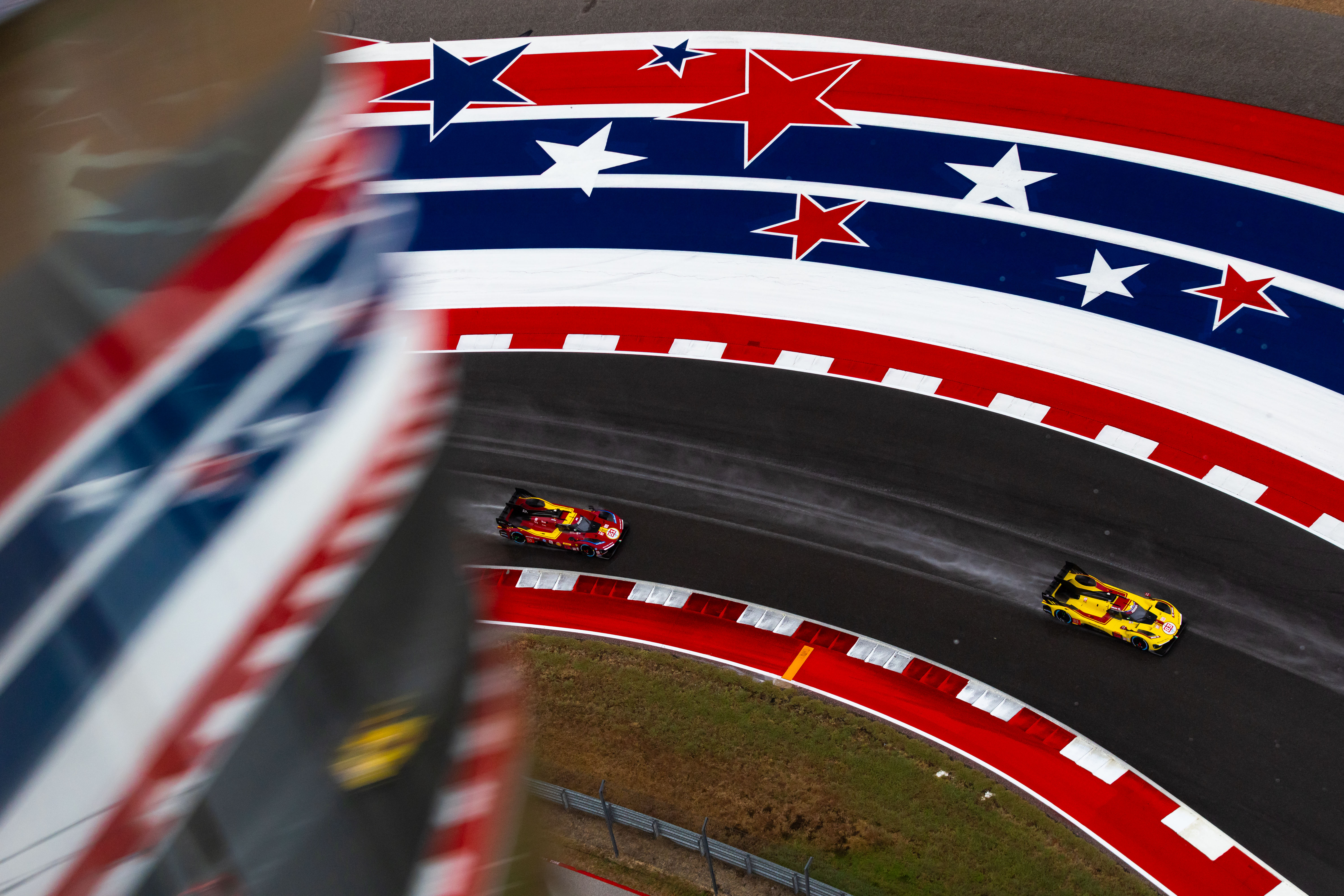
Almost two months since the last round at Interlagos, WEC returns to North America for Lone Star Le Mans. Circuit of The Americas (COTA) in Austin, Texas, will host round five of the 2026 championship, right after the FIA announced a venue change for the final two races of the season.
Championship Overview Ahead of Lone Star Le Mans
The WEC title race is still on. Toyota Racing leads the Manufacturers’ standings, only five points ahead of latest race winners BMW. Ferrari AF Corse remains within striking distance as the season hits its last stretch. In the Drivers’ Championship, the #7 Toyota crew of Mike Conway, Kamui Kobayashi and Nyck de Vries is tied at the top with the #20 BMW. This makes Austin a pivotal round, where a single tactical error could reshape the title fight.
Track History
Designed by Hermann Tilke and opened in 2012, COTA has become a modern classic in endurance racing. It has been on the WEC calendar for Lone Star Le Mans since 2013, with short breaks between 2018-2019 and 2021-2023. The circuit is famous for taking inspiration from iconic venues worldwide, incorporating elements resembling Silverstone’s Maggots and Becketts, as well as Hockenheim’s arena section, into a single facility.
The circuit was the first in the United States to be purpose-built for Formula One, but currently hosts events for a variety of racing series, from NASCAR, to MotoGP, to WEC.

Track Guide
COTA is a 5.513 km long circuit (3.426 miles) that, like Interlagos, runs anti-clockwise. Its key feature is a steep, 41-meter (133-foot) elevation gain into Turn 1, which then descends to the iconic esses. The high aerodynamic load cars face when driving through these fast curves, together with the severe strain the direction of the layout poses on the left-side tires, make COTA a truly challenging track to race on.
The heavy braking zone at Turn 12, where Hypercars drop from over 300 km/h to 60 km/h, is the main passing spot for prototype traffic making its way through slower GT3 machinery. Managing multi-class traffic through Sector 1 without losing downforce or momentum is critical for cars to maintain lap-time consistency.

Austin in late summer brings severe heat and high humidity, pushing cockpit temperatures to grueling levels. Track temperatures often exceed 40°C (104°F), accelerating tire degradation and forcing engineers to carefully consider stint duration and strategy choices.
Additionally, sudden storms can hit the circuit, making weather strategy a major wildcard. Last year, the race was halted because of a violent thunderstorm, which forced the cars into the pits for two hours.
The top three of the 2025 Lone Star Le Mans
During last year’s Lone Star Le mans, Porsche Penske Motorsport mastered the uncertain tarmac conditions to secure their first victory of the 2025 season, with Kévin Estre, Laurens Vanthoor, and Matt Campbell steering the #6 Porsche 963 to the top step of the podium.
Eight seconds behind them was the #50 Ferrari AF Corse 499P driven by Antonio Fuoco, Miguel Molina, and Nicklas Nielsen. Rounding out the Hypercar podium, the #94 Peugeot TotalEnergies crew of Stoffel Vandoorne, Loïc Duval, and Malthe Jakobsen put together a standout performance to grab third place, marking Peugeot’s strongest result of the season. In the LMGT3 class, the #95 United Autosports McLaren inherited the victory following a post-race penalty for contact handed to the on-track winner #54 Vista AF Corse Ferrari. Valentino Rossi’s #46 Team WRT BMW took second place, while #54 dropped to third.

With championship margins tightening and six hours of unpredictable multi-class racing, Lone Star Le Mans will undoubtedly deliver non-stop drama and exciting racing.
Will Toyota manage to claim another win, or will BMW cement their position at the top of the standings? Get ready to find out this weekend for the 2026 Lone Star Le Mans race.