
The economic impact report always sounds the same, wherever the race is. A headline number, a mayor thanking the sport, and a promise that the money reaches everyone nearby. What’s harder to find is the version told by the people actually living and working next to the circuit. This is what communities affected by F1 street races have actually said, in their own words, backed by the numbers that explain why they’re saying it.
What It Actually Costs to Bring The Party To Town
Before getting to any single city, it’s important to be clear on what a street race actually requires. That determines who ends up exposed when things go wrong.
Annual F1 hosting fees for street circuits typically run $20 million to $55 million. Most contracts build in automatic increases of up to 5% a year. On top of that fee, crew members must build and dismantle a temporary street circuit almost from scratch every single year. This work closes roads, reroutes public transport and disrupts local businesses along the route for weeks – or even up to a year – in some cities. These are the real communities affected by F1.
The four races here sit at very different points on that spectrum. Miami’s deal runs through 2041, the longest active contract on the calendar. Baku signed a four-year extension in 2025 that keeps it on the schedule until at least 2030.
Singapore’s current deal runs only to 2028. Las Vegas was recognised by Clark County through 2032, despite F1’s actual contract there initially covering just three years, a mismatch that’s shaped a lot of what follows.
Miami: Where Communities Affected By F1 Are Split

Before Miami’s street race turned a wheel in 2022, residents of Miami Gardens, the working-class community bordering Hard Rock Stadium, were already speaking out against it.
“Formula 1 has never belonged in a bedroom community.” – Karen Hunter-Jackson, Miami Gardens Strong
Four races later, the numbers around the event are genuinely large. The 2023 race alone generated $449 million in local economic impact. It was up 29% on 2022, with more than 275,000 people attending across the weekend.
Organisers say the cumulative figure has passed $1 billion since 2022. Building and dismantling the circuit takes more than 1,500 workers between January and May each year. The race weekend itself credentials over 18,000 people with the majority of them local hires.
Some of that money has been directed deliberately at the surrounding community. A Community Restaurant Program, now in its fifth year, puts local vendors inside the circuit for race weekend, two-thirds of them female-owned. Miami Gardens has also received grant funding for home renovations and small business support directly tied to the race deal. La Vela Coffee, a Miami Gardens roasting company, has sold inside the circuit every year since 2022.
“The last two years have been phenomenal for us.” – Bertha Gross, Co-Founder, La Vela Coffee
A short drive away, Lorna’s Caribbean & American Grill hasn’t felt any of it. Of the fifteen local restaurants that took part in the 2025 programme, only four were actually Miami Gardens-resident-owned, and owner Matari Bodie says the race passes his restaurant by entirely.
“We don’t really notice a real impact because the business isn’t recognised.” – Matari Bodie, Owner, Lorna’s Caribbean & American Grill
Same race, same neighbourhood, roughly a mile apart, two completely different balance sheets. This is just one of the many communities affected by F1.
Las Vegas: When The Businesses You Promised To Help Sue You

Vegas did not build a temporary street race so much as buy a permanent piece of the Strip. F1 purchased a 39-acre site for $240 million and spent an estimated $500 million building a permanent pit and paddock building. It was based on the logic that a race locked in through 2032 justified the investment. Clark County separately spent roughly $80 million on road and infrastructure work for the 2023 launch.
The projected returns have slipped since. The reported economic impact fell from $1.5 billion in 2023 to $934 million in 2024. Attendance across the 2023 weekend was around 105,000. For businesses along the route, the disruption started well before any of that money arrived. Convenience store owner Wade Bohn watched one of his two entrances get blocked by construction crews mid-build, and said his revenue dropped from $8.5 million in 2022 to just over $4 million in 2023.
“It literally made me sick to my stomach.” – Wade Bohn, Owner, Jay’s Market
He wasn’t alone. Seven business owners along Flamingo Road and Koval Lane eventually pursued legal action, with a group citing a combined $23 million in losses tied to a temporary pedestrian bridge that cut off customer access.
Last year, three of those cases were settled. Liberty Media’s own CEO acknowledged the toll publicly ahead of the inaugural race.
“I want to apologise to all the Las Vegas residents.” – Greg Maffei, CEO, Liberty Media
The apology came first. For some of the businesses involved, the disruption came every November after it, until the settlements finally closed the loop.
Baku: The Residents Nobody Really Asked

Azerbaijan signed its original ten-year deal with F1 in 2016. The promoter has never been shy about what it believes the race delivers.
“F1 in Baku is more than just a showpiece event.” – Arif Rahimov, Executive Director, Baku City Circuit
A PricewaterhouseCoopers report commissioned by the promoter and published in 2020 put the race’s cumulative economic contribution across its first four editions at more than $500 million. This was alongside an estimated 5,000 to 10,000 short-term jobs each year. The report itself has never been made public in full, and the methodology behind those figures has never been independently verified.
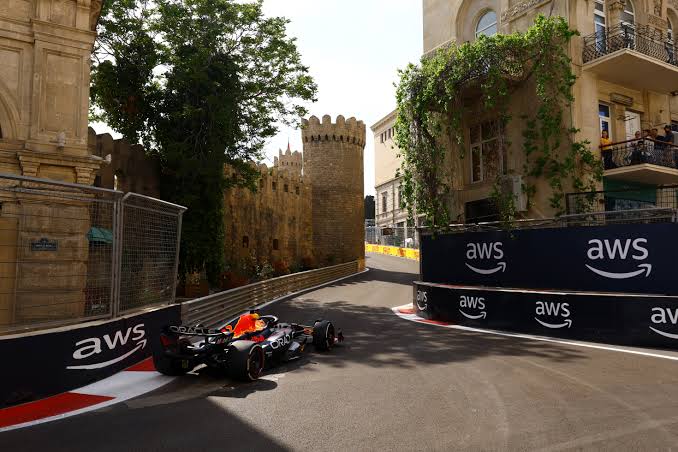
The people living along the circuit tell a less quotable version. Residents have described hiked taxi fares, blocked pedestrian routes, traffic jams and noise pollution stretching well beyond race weekend itself. The building and then dismantling the street circuit around Baku’s historic old town takes the better part of a year each cycle.
Some schools along the route have shifted to online learning during race week to avoid the disruption entirely. Unlike Rahimov’s number, none of that ever makes it into a press release. With the race now locked in until at least 2030, it’s a cycle the city is committed to repeating for years yet. The communities affected by F1 can only repeat their adjustments year after year than expect for anything else.
Singapore: Mixed, By The Government’s Own Admission

Singapore’s night race, running since 2008, is usually described in tourism-board language. More than $2.2 billion in cumulative incremental tourism receipts, an average of close to 40,000 international visitors and roughly $150 mullion in incremental spending per edition, about a third of which, $50 million, lands directly in local retail and food and beverage.
Small and medium enterprises make up around 80% of the promoter’s annual race-organisation workforce.
The government covers up to 60% of hosting costs, now estimated at $135 million to $140 million a year, under a deal that runs only to 2028. Attendance has occasionally suffered for reasons unrelated to the race itself. When the Bay Grandstand closed in 2024 for a redevelopment project, attendance fell from a record 302,000 the previous year to roughly 250,000.
For a long time, the tourism numbers were the entire official story. However, that changed with a written parliamentary reply confirming the government now formally engages business owners near Marina Bay specifically because some have reported ‘adverse impact’ from road closures and restricted access.
Officials point out that the closure period has already been more than halved, from 12 days in 2008 down to seven today. Independent reporting on the race’s economics has put the underlying sentiment plainly. Small businesses and residents remain genuinely split on whether the benefits reach them evenly.
Some shops report their best weekend of the year. Others just watch the barriers go up. This is the most visible difference between the communities affected by F1.
By The Numbers: How The Four Compare

Line the four up together, and the differences say almost as much as the testimony does.
Miami has the longest runaway, a contract to 2041, and has built the most deliberate community-facing programme around it, restaurant partnerships, internships, direct grants, even if the benefits still land unevenly within a few miles of the track.
Las Vegas has the shortest history and the largest capital exposure, a $500 million permanent building backing a race whose own promoters have openly discussed extending the contract specifically to justify further investment.
Baku has the least transparency, an unpublished report and a decade of construction cycles, but also the most secure political backing, a government contract now running to 2030 regardless of local sentiment.
Singapore has the most institutional accountability of the four, the only one where the government has gone to record acknowledging harm to specific businesses. However, they are also the shortest remaining contract, with just two more editions confirmed before 2028.
None of the four have anything close to a majority of small businesses on record saying the race is bad for them. None of them have unanimous support, either. What determines which side of that line a given business falls on has far less to do with the country, the government or the size of the economic impact number. It has far more to do with something much smaller. That is, whether that business happened to end up inside the fence, or just outside it.
What Communities Affected By F1 Actually Say

Put these four side by side, and the pattern isn’t love or hate. It is simply proximity.
Race organisers fold Miami’s community restaurant vendors into the event, so the vendors tend to love it. The ones left just outside of the circle are close enough to feel the road closures but are too far to catch the spending. They tend to hate it.
Baku’s residents and Vegas’ small shop owners are saying some version of the same thing. Nobody asked them first, and the number in the press release was never going to be the one that showed up in their till.
Every F1 street race produces two reports every year. One gets commissioned, polished and published. The other just gets said, out loud, by whoever’s still willing to go on the record about it once the season’s moved on.