
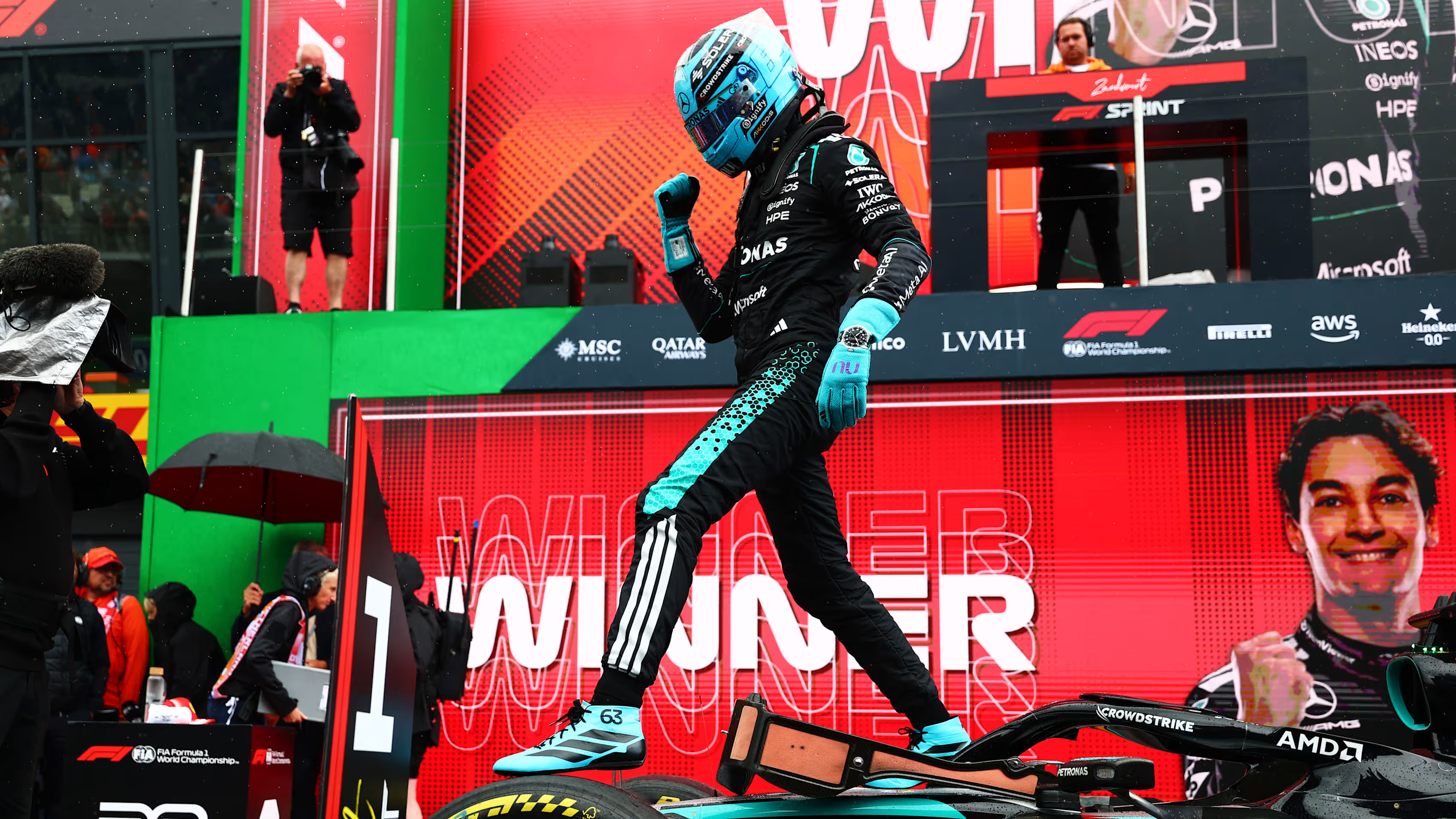
George Russell converted Sprint pole into victory at Zandvoort, delivering a composed performance in the final Dutch Grand Prix Sprint as Mercedes controlled the race from lights to flag.
The 24-lap contest began with Russell making a clean getaway from pole, immediately putting Lando Norris under pressure to stay within striking distance. Norris held second through the opening sequence of corners, with Charles Leclerc following closely behind and Kimi Antonelli settling into fourth.
There was little between the leading cars early on. Russell could not disappear up the road, but Norris was never quite close enough to threaten a move. The Mercedes driver managed the gap carefully, using just enough pace to keep the McLaren outside the DRS threat while protecting his tyres for the second half of the race.
Norris, meanwhile, had to spend much of the opening stint looking more in his mirrors than through his windscreen. Leclerc remained firmly attached to the back of the McLaren, and Ferrari’s decision to put the soft tyres on the car began to look increasingly interesting as the race progressed.
The first major shift came as the tyres started to fall away. Norris began to lose some of his initial pace, allowing Leclerc to close rapidly. Ferrari had been patient, and the Monegasque was now close enough to put genuine pressure on the McLaren.
Russell was already building enough of a cushion at the front to make the battle behind largely irrelevant to his own race. His advantage was never enormous, but it was consistently managed. Every time Norris threatened to close the gap, Russell responded, keeping the Mercedes just beyond reach.
Leclerc eventually made his move on Lap 18. He closed onto Norris through the final sector before committing into Turn 1, braking late and carrying enough momentum to complete the pass. Norris attempted to fight back, but the Ferrari had already established the position and quickly pulled clear.
With Leclerc now in second, the attention shifted towards the gap at the front. Ferrari had found strong late-race pace, but Russell had done enough work earlier in the Sprint to keep the victory out of reach. The Mercedes driver controlled the final laps cleanly, never giving Leclerc a realistic opportunity to attack.
Russell crossed the line to claim another Sprint victory, while Leclerc secured an impressive second place for Ferrari. Norris completed the podium, having lost out to the Ferrari but still collecting valuable points for McLaren.
Antonelli finished fourth after spending the closing stages applying pressure to Norris. The Mercedes rookie had recovered well from his Sprint Qualifying mistake and came close to challenging for the final podium position, but Norris managed to hold him off until the chequered flag.
Oscar Piastri followed in fifth, unable to reproduce the kind of pace that had put McLaren in contention during qualifying. The Australian remained close enough to the leading group to stay relevant, but never looked likely to make a move for the podium.
Max Verstappen finished sixth, giving the home crowd something to celebrate but falling short of the fight at the front. Red Bull lacked the outright pace of Mercedes, Ferrari and McLaren throughout the Sprint, leaving Verstappen to settle for damage limitation rather than a serious challenge for victory.
Lewis Hamilton brought the second Ferrari home in seventh, while Pierre Gasly completed the points-paying positions in eighth. Further back, the midfield remained tightly packed, with several cars separated by only a handful of seconds for much of the race.
The arrival of rain towards the end added another layer of uncertainty, particularly with the circuit already beginning to look greasy. But the weather never developed into a major enough factor to change the order. The leaders were able to stay on their existing tyres, and Russell in particular looked completely comfortable as the conditions deteriorated.
That composure was ultimately what defined the Sprint. There were no dramatic restarts, no major incidents and no late safety car to throw the field together. Instead, Russell simply executed the race better than anyone else. He took the advantage Mercedes had given him in qualifying and turned it into a controlled eight-point haul.
For Ferrari, Leclerc’s second place was arguably the most encouraging part of the afternoon. The soft-tyre strategy gave him enough performance late in the race to overtake Norris and showed that Ferrari could become a serious factor over the longer Grand Prix distance.
McLaren, meanwhile, has a little more to think about. Norris had started from the front row and spent most of the Sprint in second, but the late drop-off left him vulnerable to Leclerc and nearly allowed Antonelli to take third. Piastri’s fifth place only reinforced the sense that the team has work to do before Sunday.
Mercedes leaves the Sprint weekend’s opening act with the strongest result and plenty of momentum. Russell has shown that the car is quick enough to win, Antonelli has recovered from his qualifying error, and the team has already collected a substantial points haul.
But the Sprint also made one thing clear. The gaps between the leading teams are small enough that tyre behaviour could completely change the picture over Grand Prix distance.
Zandvoort’s final F1 weekend has therefore begun with a familiar story at the front, but not a predictable one. Russell has the win, Leclerc has the late-race momentum, and McLaren still has the pace to fight back. With a much longer race ahead, the Sprint may have answered who had the strongest car over 24 laps, but it certainly has not answered who will have the strongest package when it matters most.