
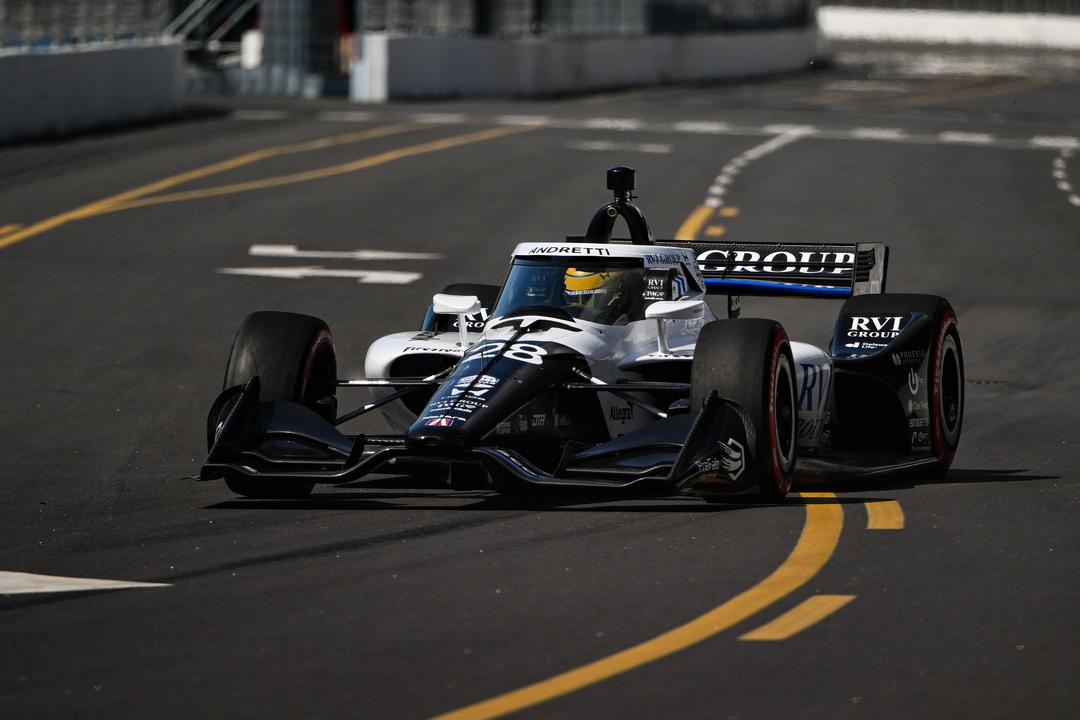
A New Home for IndyCar
The inaugural Ontario Honda Dealers Indy at Markham marked IndyCar’s return to Ontario and the debut of the Streets of Markham. The 2.19-mile, 12-turn street circuit replaced Toronto on the calendar, giving teams and drivers a completely new challenge with no previous race data to rely on.
That unfamiliarity was immediately apparent during the weekend. Louis Foster claimed the circuit’s first pole position, while championship leader Álex Palou and Will Power both experienced difficult qualifying sessions.
A Race Shaped by Strategy
The race quickly became a battle of strategy rather than simply outright pace. Multiple cautions repeatedly changed the running order, making pit-stop timing, tyre management and track position increasingly important.
Marcus Ericsson and Andretti Global were able to capitalise on this uncertainty. Their strategy initially looked risky, but as the race progressed, Ericsson found himself in a strong position for the closing stages.
Romain Grosjean also benefited from the changing strategies. The Dale Coyne Racing driver emerged as one of the surprise contenders for victory and spent much of the closing stages fighting at the front.
However, Ericsson had the advantage when it mattered most. Fresher tyres allowed him to close the gap to Grosjean and eventually take the lead, making him the first IndyCar winner at Markham.
Power’s Recovery
Will Power completed the podium after recovering from a difficult weekend. Having crashed during practice and started deep in the field, Power’s third-place finish represented one of the strongest recoveries of the race.
His result also highlighted how quickly the order could change around Markham. With cautions creating opportunities for drivers to gain track position, starting near the back did not necessarily mean finishing there.
Palou Plays the Long Game
While Ericsson took the victory, Álex Palou arguably achieved the most important result for the championship.
Palou started outside the top ten following his qualifying difficulties but fought his way back to fourth. With several of his championship rivals failing to score heavily, the result allowed him to extend his championship advantage to 133 points.
It was a classic example of damage limitation. Palou did not need to win at Markham; he needed to avoid losing significant ground to his rivals. By finishing fourth, he achieved exactly that.
What Markham Adds to IndyCar
The inaugural Markham race was far from perfect, but it demonstrated the potential of the new circuit. The unfamiliar layout, changing strategies and frequent cautions created a race where qualifying position did not necessarily determine the final result.
Foster started from pole but did not win. Power started deep in the field and finished third. Grosjean came close to a surprise victory, while Ericsson turned an aggressive strategy into the first win in Markham’s history.