
Sakhir, December 2020. Sergio Pérez crosses the line at the front of the field for the first time in 190 Grand Prix starts. It was a wait longer than any driver in the sport’s history. His arms were already punching the air before the car had stopped moving.
It is, by every measure, the best day of his career so far. It was also a day that belonged to a team he already knew he was leaving.
A Win That Wasn’t a Beginning
Three months earlier, Racing Point F1 Team, now known as Aston Martin Aramco Formula One Team, owner Lawrence Stroll had called Sergio Pérez to tell him the team was going in “another direction.” Sebastian Vettel was coming. Pérez had signed a three-year extension only the year before, but none of that mattered once a four-time champion became available.
He found out the way most drivers find out these things: on the phone, with almost no warning, about a decision that had already been made without him in the room.
So when Sergio Pérez won at Sakhir, he won it for a team that had already told him he had no future there. The victory was real. The security was not. It is a strange thing, to have the best result of your life land inside a story someone else has already decided to end.
Four Years of Building Something
Oracle Red Bull Racing signed him for 2021, and for a while, it looked like a second chance at authorship. Sergio Pérez built a version of himself race by race: the man who could hold his own alongside Max Verstappen, who took Baku in 2021, two wins in 2022 and a career-best runner-up finish in the 2023 drivers’ championship. He was on the podium 26 times across his four seasons with the team.
A role, a reputation, a place on the grid that felt, for once, secured through performance rather than circumstance.

That is usually how athletic identity is supposed to work. It’s built cumulatively. One race at a time, one result at a time, until it stops being a hope and starts being a fact. ‘A driver who beats the odds‘ needs evidence before it can be true. By the end of 2023, Sergio Pérez had the results to make that fact stick.
None of it came from an equal footing. Sergio Pérez has been candid about what it actually meant to share a garage with a four-time World Champion who had, by his own account, the bulk of the team’s engineering resource behind him.
“To face Max [Verstappen] at Red Bull is the toughest.” – Sergio Pérez, on the High Performance Podcast
He’s framed the imbalance as a binary he faced every season: complain about it, or work with what he had. He chose the latter, keeping the same engineering crew for all four years and treating the mismatch as a teacher rather than a grievance.
That distinction matters for the identity question – a driver who authors meaning out of a structurally unfair situation is still, in some sense, holding the pen. What came at the end of 2024 took the pen away entirely.
The Extension That Wasn’t Enough
Then 2024 happened. In June, Red Bull handed Sergio Pérez a two-year extension. In the second half of the season, his results fell off a cliff – just 49 points across the final 18 rounds, while Verstappen kept scoring. By December, the extension was effectively nullified and Liam Lawson had the seat.
“Well, we have many drivers.” – Christian Horner, then-Red Bull Team Principal, recounted by Sergio Pérez to Spanish-language podcast Desde el Paddock
Pérez later recalled that exit conversation, half-joking about what would happen once his successors also struggled. Lawson lasted two races before Yuki Tsunoda replaced him.
Erosion versus Interruption
There is a meaningful difference between a driver whose form erodes and a driver whose seat is taken. Erosion happens slowly, in private, lap by lap – a driver has time to renegotiate their own sense of self as the results decline, to grieve a version of themselves gradually, on their own schedule.
An interruption happens on someone else’s timeline entirely. One phone call, one press release and the story a driver has been writing about himself for years is suddenly being narrated by somebody else.
Sergio Pérez’s form did decline in 2024 – that part isn’t in dispute. But the manner of the ending was still administered from outside: a signed contract torn up, a decision delivered rather than discussed.
“Very, very tough, and I would say toxic.” – Sergio Pérez, describing his final six months at Red Bull, on the High Performance Podcast
Whatever was eroding privately through the second half of that season, the finish itself was interrupted – decisive, external and not his to control.
The Year Away for Sergio Pérez
Sergio Pérez did not race in 2025. A season with no seat is an unusual kind of silence. Especially for a driver who had spent almost every year since 2011 defined by lap times and championship points. Stepping away from that scaffolding, even briefly, tends to force a different question. It wasn’t ‘how fast am I,‘ but ‘who am I when nobody is measuring.‘

He has since said Red Bull “regrets” how it played out. Pérez pointed to the pressure the team itself created. Whether or not that reading holds, the sabbatical did what it often does for athletes stripped of their usual proof of self. It bought time to rebuild an identity that wasn’t just reactive to the last result.
Writing the Next Chapter, at the Back of the Grid
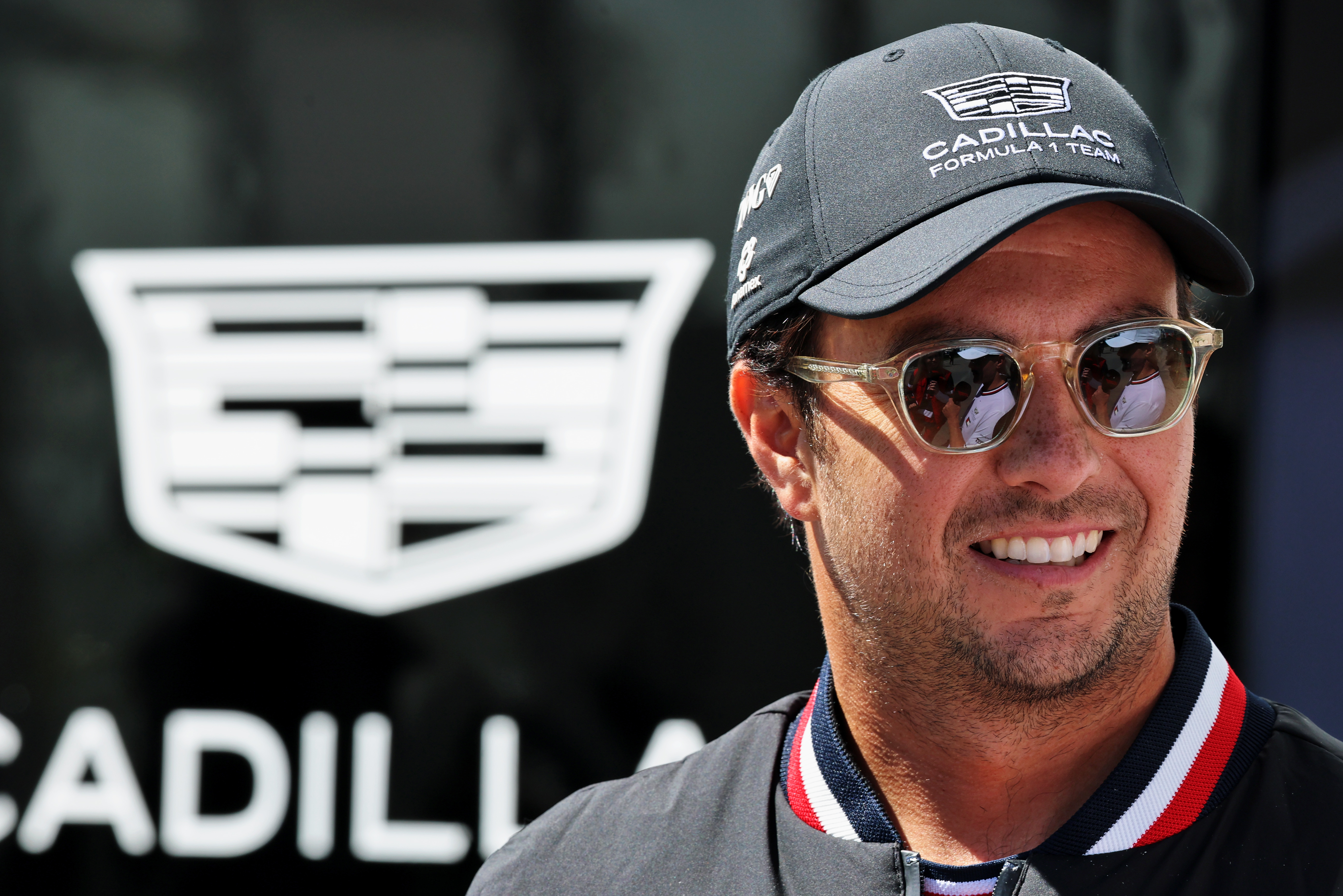
Cadillac F1 Team announced Sergio Pérez alongside Valtteri Bottas in August 2025. By the time the team reached its season debut, the challenge was obvious. Eleven rounds into 2026, Cadillac sits without a point, still finding its feet as Formula 1’s newest constructor.
“It has been very tricky, it has been very difficult for us to develop.” – Sergio Pérez, Cadillac driver, ahead of the 2026 Hungarian Grand Prix
It is, on paper, a harder grid position than anything he faced at Red Bull. But it is also the first seat in years that nobody handed him and nobody can quietly take back on a phone call he didn’t see coming. Back at Sakhir in 2020, Sergio Pérez’s best result arrived inside a story that had already been closed on him.
At Cadillac, even a difficult one is finally, fully his own to write.