
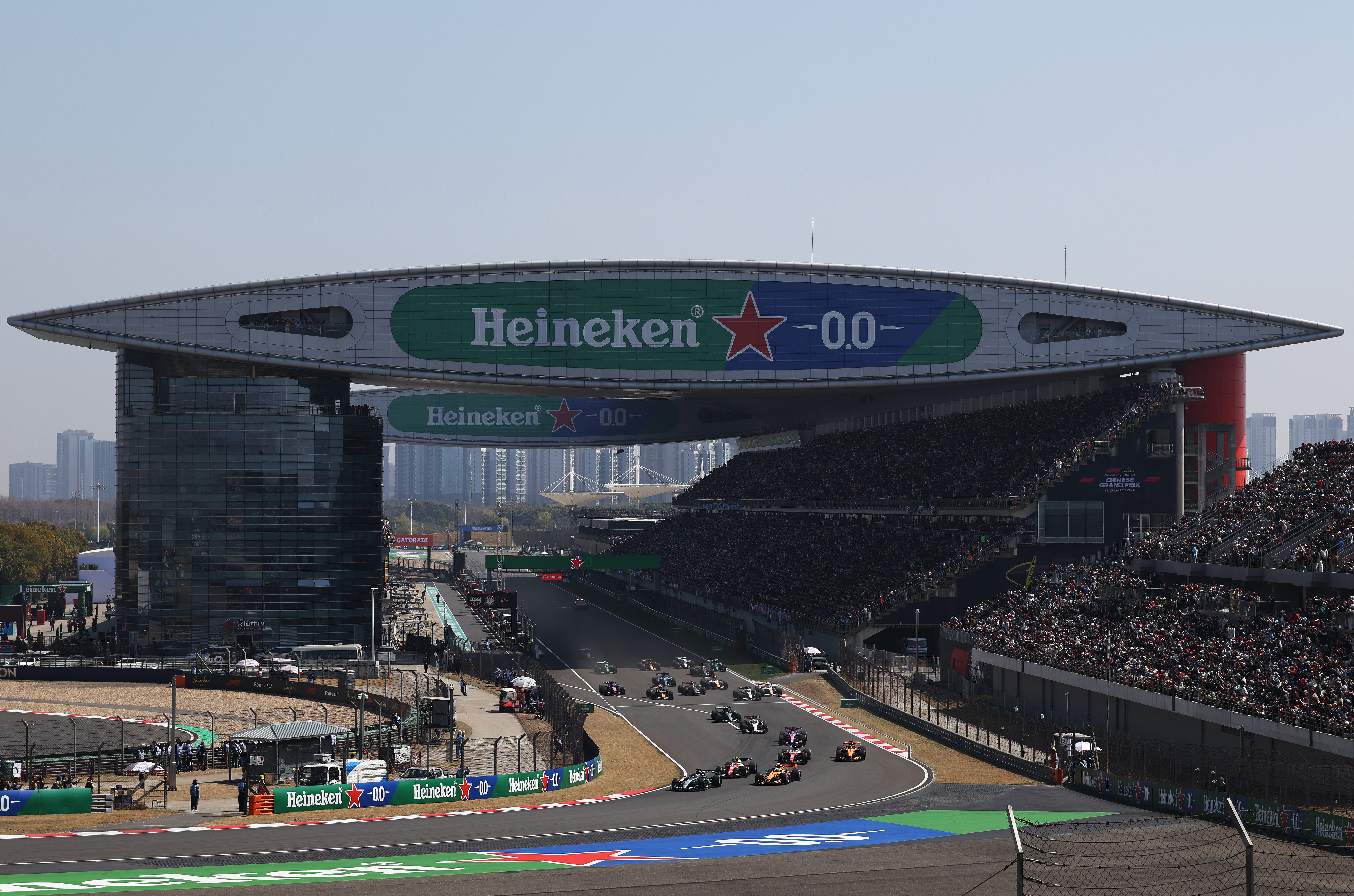
With the new regulations having been in effect for three races, we’ve begun to see a preview of what they could mean for Formula 1’s future. They’ve already been subject to revision and ongoing refinement due to their lack of safety and drivers’ discontent.
Criticism has followed them from the outset, with some dismissing the changes as “Formula E on steroids”. So what exactly is it about these regulations that has sparked such controversy?
Driver Safety
There is a growing consensus that driver safety has almost gone out the window under the regulations. Concerns have intensified following incidents such as TGR Haas’ Oliver Bearman’s crash at Suzuka. Which was widely attributed to the severe speed discrepancies between cars on track.
With the introduction of an entirely new chassis and engine formula, most notably a near 50-50 split between internal combustion and electrical output. The questions are piling up over whether safety considerations are keeping pace with the sport’s rapid technical evolution.
“It was a massive overspeed, 50 kph which is a part of these news regulations that I guess we have to get used to,” Oliver Bearman, TGR Haas Formula 1 Driver said following his crash.
For a driver to suggest they simply need time to adapt to new regulations in the wake of such a serious incident raises questions around whether they should keep them.
The Economical Engines
Alongside their 50-50 split engines, they have yet another new rule, which mandates 100% advanced sustainable fuels. While the push to make motorsport more environmentally sustainable is understandable, racing has never been particularly green. In Formula One the bulk of emissions come not from just the cars but from logistics and travel, which together account for the vast majority of the sport’s carbon footprint.

If sustainability is the primary objective, you could argue it is better suited to series like Formula E. Instead, it’s forcing a compromise that may come at the expense of safety in other categories.
The appeal of Formula 1 has long been rooted in the raw power of the engines. The drive to make the sport greener risks diminishing that factor. Formula 1 is currently on track to be net zero by 2030. At the end of the 2024 season, the sport managed to bring their tonnes of carbon dioxide down from 228,793 t CO₂e compared to the 2018 statistics.

As these sustainability targets come into focus, it raises an unavoidable question: are race-day tactics such as Lift-and-Coast beginning to compromise the very essence of wheel-to-wheel racing?
The New Tactics
With the pre-revised regulations, drivers are having to find ways to give themselves a tactical advantage. The Lift-and-Coast has been used by Formula 1 drivers for decades. This season, however, it has shifted from a tactical option to a necessity. Drivers are now required to rely on it to conserve battery energy, essentially altering how they approach a lap.
If one driver lifts early into a braking zone while another commits at full speed, it creates the potential for late, aggressive moves from much further back. McLaren Mastercard has even stated that they feel this is less intuitive and a less safe experience for the drivers.
This is particularly evident during qualifying sessions. What was once a pure test of speed and outright commitment has evolved into a far more tactical contest. It is within this shifting dynamic that another factor begins to show itself. The new phenomenon known as “Super-Clipping”.
Super-Clipping
Super-Clipping has become a popular trend amongst drivers. In short, it allows them to harvest energy for the battery while keeping the throttle pinned at 100%. Unlike the more visible Lift-and-Coast approach, this method maintains a low-drag, high-speed profile. However, it comes with a trade-off: a subtle yet significant drop in top speed as power is diverted away from the wheels and into the battery.
This takes away from driver skill in high-speed sections. Instead of focusing on core racing tasks like overtaking, drivers are increasingly occupied with managing battery energy. The engine management demands are being viewed as unnatural and in need of refinement. This is an assessment echoed by a number of drivers.
Overtake Mode
It’s not just the fans who have felt a discontent with the new regulations, drivers have made their own feelings very public. In particular, comments surrounding the use of Overtake Mode have proved especially revealing.
Aston Martin’s Fernando Alonso has commented that the high cost of energy it takes to make a pass might be deterring drivers from even trying.
Overtake Mode is basically the new DRS. To activate it, a driver must be within one second of the car ahead, mirroring the same proximity rule. Unlike DRS, however, it leaves drivers significantly more vulnerable on the following straight. This is often resulting in repeated position changes as cars trade places back and forth. Fans have also commented on the visibility issue. There’s a lack of on-screen data clarifying when drivers are using the mode, making it less transparent than the old DRS system, where it was a visible open wing.

The system is intended to encourage overtaking in less conventional areas and reduce the impact of the so-called DRS train. However, its structure inherently favours the pursuing car.
While this can create more visually engaging moments, it does not necessarily deliver the kind of racing it was designed to produce, which feeds back into the broader issue of energy management. Drivers appear increasingly reliant on these systems rather than outright pace, contributing to a more artificial feel to the racing.
Driver Discontent
While concerns have been raised across the grid, one of the most vocal figures has been Oracle Red Bull Racing’s Max Verstappen. He has even hinted at the possibility of stepping away from the sport. This offers a clear insight into how the pre-revised regulations are shaping not only the fan experience, but also the mindset of the drivers themselves.
“It’s still terrible. I don’t know; if someone likes this, then you really don’t know what racing is about. It’s not fun at all. It’s playing Mario Kart.” Max Verstappen, Oracle Red Bull Racing Driver commented following the Chinese Grand Prix.
Revised Regulations
A number of refinements have already been made to the regulations following the recent controversies. The revised rules will be implemented and tested at the Miami Grand Prix. They have also extended the standard practice session time at Miami to ninety minutes. This is to give drivers more time to adapt to these new refinements.
The Race
Two changes have been made to improve safety and ensure more consistent performance.
The first concerns the maximum power available through Boost during races. This has now been capped at an additional 150 kW, or at the car’s current power level at the moment of activation, if that is already higher. The aim is to reduce sudden differences in performance between cars. This aims to reduce the risk of crashes like Oliver Bearman’s from happening.
The second change to the race concerns MGU-K deployment. It will deliver 350 kW in key acceleration zones, specifically from corner exit to the braking point, including overtaking sections, while being restricted to 250 kW across the rest of the lap.
Formula One and the FIA have hope that these changes will reduce excessive closing speeds while preserving overtaking opportunities. Although these changes are a positive step, they will only be effective if drivers actually start the race, which has been a rarity throughout the 2026 season.
Race Start
The race start itself has had four additional refinements made. This is to enhance a safer race start.
A new system has been developed called ‘low power start detection‘ which is capable of identifying cars with abnormally low acceleration shortly after clutch release. If this occurs, an automatic MGU-K deployment will be triggered to ensure a minimum level of acceleration and reduce start-related risks without providing any sporting advantage.
Another new system is the associated visual warning system. This will activate flashing lights on the rear and lateral of affected cars. They hope this will alert following drivers, ensuring a safer start to the race.
Finally, there is a reset of the energy counter at the start of formation laps. This has been implemented to address a previously identified system inconsistency. Obviously, we don’t know how these refinements will play out during a race, but safety is clearly one of their main concerns.
Wet Conditions
Formula One and the FIA have listened to driver feedback regarding wet conditions, and three refinements have been introduced.
First is a simplified the rear light system, which provides a clearer and more consistent visual cue. There is hope that this will improve visibility and reaction time for following drivers in wet conditions. This may also work alongside the newly introduced race start light system.
They have also adjusted the tyre blanket temperatures for intermediate tyres, increasing them to enhance initial grip and overall tyre performance.
Finally is the development of reducing the maximum ERS deployment, which will limit torque output and improve car control in low-grip conditions.
Qualifying
Three changes will be implemented to Qualifying. Their hope is that this will improve overall performance.
The first change involves adjustments to the energy management parameters, including a reduction in the maximum permitted recharge from 8 MJ to 7 MJ. The aim is to reduce excessive energy harvesting and encourage more consistent flat-out driving. The change is targeting a maximum superclip duration of two to four seconds per lap.
They have also increased the superclip power to 350 kW, up from 250 kW. This is intended to further reduce the time spent recharging and ease the driver’s workload in managing energy. It will also apply throughout the race.
Finally is the increase of the number of events where alternative lower energy limits may apply, raising it from eight to twelve races. This is intended to allow greater adaptation to different circuit characteristics.
Following the Changes
Formula 1 has always been an evolving sport, but with the growing emphasis on being economical, it is starting to resemble Formula E, an extreme edition, or even something closer to Mario Kart. With these new refinements in place, there is a chance it could restore some of the essence of what Formula 1 is meant to be. Equally, it could end up as just another set of regulations that frustrates both drivers and fans. Ultimately, it will come down to how these changes play out after the Miami Grand Prix.