
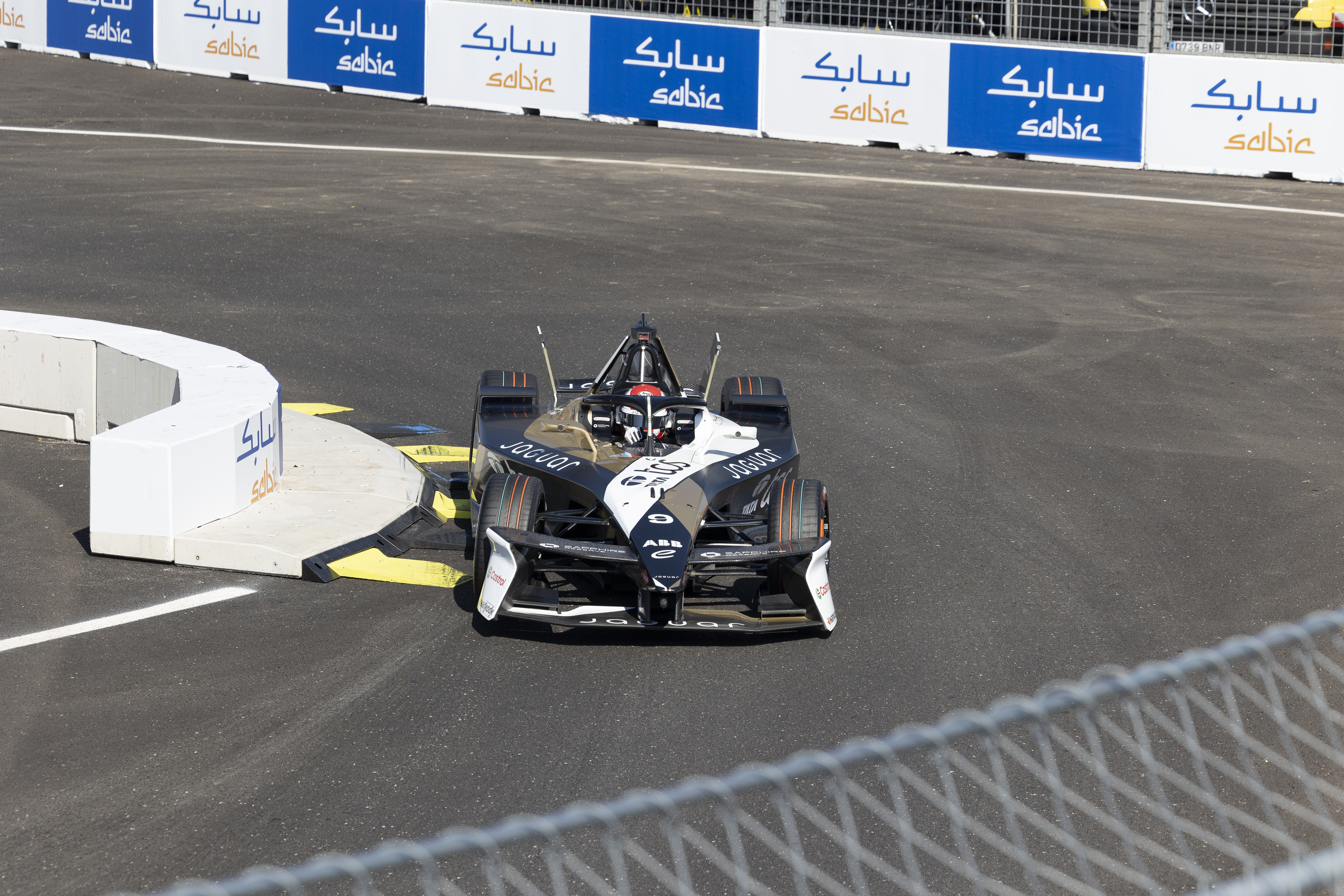
Following Session 1 of the Rookie Test, returning talent Juju Noda caught up with The Girls Who – Motorsport about her time in the GEN3 Evo. She reflected on her first session and her goals for the second. Beyond on-track responsibilities, she also speaks on the visibility Formula E has given her.
Building on Familiarity
Noda’s first taste of the Jaguar was at the All-Women’s Test in Valencia last season. Since then, she’s spent notable time in the simulator preparing for her second drive at the Madrid Rookie Test. Reflecting on her drive during her first drive, she mentions how much easier it was this time as she had a better understanding of the systems. The Japanese driver explains, ”I think I’m more familiar and have a much better understanding of the Formula E car compared to last time; I struggled less.”
Familiarity with the all-electric car is an advantage; drivers spend less time worrying about the systems and more time extracting crucial data for the team. Relying heavily on her previous experience, Noda was able to push and progress more quickly than last time.
Noda’s biggest takeaway from the morning was the difficulty she faced with the weather. She admits that ”At the beginning of the session, it was quite cold, so I struggled to warm up the tyres.” Such a small detail, like warmed-up tyres, is fundamental to unlocking key performance, as grip levels are the difference between seconds in such a competitive field like Formula E. Once the track warmed up, Noda was sitting more comfortably in the midfield.
Aiding the Championship Battle
After a very successful start to their season, Jaguar TCS Racing sits in second position in the driver’s championship. Noda explains why team priorities come before individual performance. She emphasises the importance of testing day, as Jaguar are ”fighting for a championship, so this data is very important for them”. Sitting 4 points behind first place, every piece of advice from these sessions will work to translate into track action to close the gap.
She sacrifices personal ambition, stating that even though she is ”a racing driver and I want to drive faster than the other driver, lap times are important for the team, so I’ll do my job and do my best for the team.” Noda exposes how pushing the car and raw pace are only half of what matters. Consistent laps and direct, detailed feedback are what are most essential for a front-running team.
What This Means for Young Women
Noda admits that this opportunity is not only great for her. She also highlights the importance for ”the young girls watching at home”. The Japanese points to what Formula E is endorsing, a change in the right direction. Noda connects female fans with her achievements, motivating them to chase after theirs. She explained, ”It is important to show girls that they can choose their dream.”
Motorsports has always traditionally been a sport dominated by males. However, opportunities for women are slowly allowing them to take some control. For female drivers, they are given the experience to compete in a highly competitive field, paving a way for them to join these series in the future. For female fans, the diversity promotes representation, which opens a safe space for this community.