
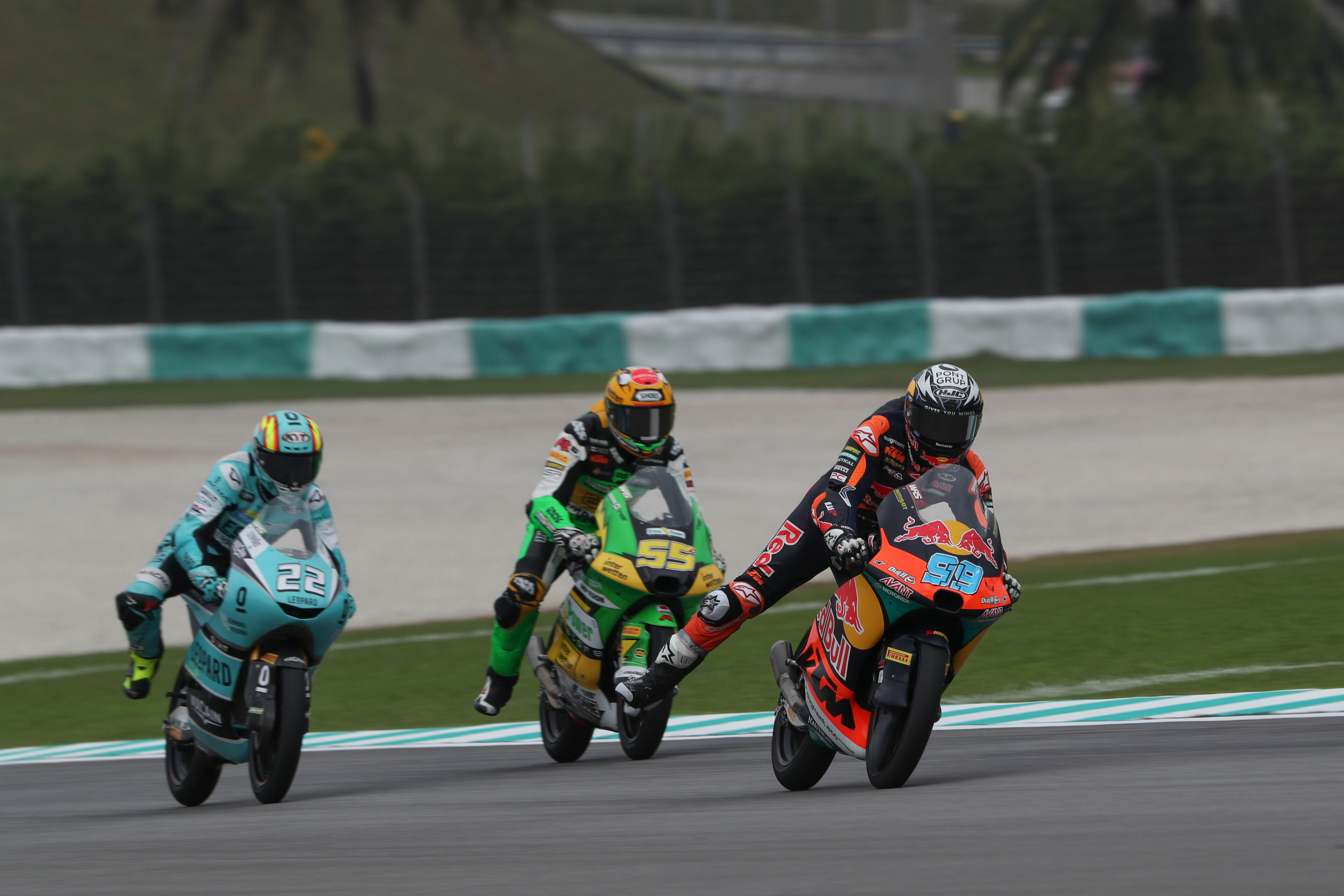
Motorcycle racing has always carried an inherent level of risk. Accordingly, safety protocols keep being refined continuously by introducing regulatory and operational changes aimed at mitigating evolving risks. However, despite advances in protective equipment and medical response, due to high speeds and close-quarters competition, incidents remain an ever-present reality. The 2025 Season has provided a constant reminder of this shifting gap with a string of incidents throughout the year. One of the most severe among them was the crash between José Antonio Rueda and Noah Dettwiler.
The Moto3 Sepang Crash
The incident happened during the Moto3 Sighting Lap at the 2025 Malaysian Grand Prix. Rueda, coming out of a turn at a significant speed, collided with the back of Dettwiler, who had slowed down following a mechanical issue. The resulting high-speed impact prompted immediate medical intervention, with both riders going under cardiac arrest, and the medical team having to airlifted them for treatment. Dettwiler sustained serious injuries requiring multiple surgeries, while Rueda received treatment for a concussion and fractures. Rueda has since recovered and resumed racing, while Dettwiler is still undergoing rehabilitation.
The Immediate Aftermath
The severity of the Rueda-Dettwiler crash quickly prompted broader scrutiny. The decision to continue racing while both riders were receiving medical treatment drew criticism from the paddock. Teams and riders raised concerns about whether race control had communicated sufficient information to the paddock. The incident also reignited the debate around sighting lap procedures and the removal of the Sunday Moto3 and Moto2 warm-up sessions in recent seasons.
The crash also prompted deliberations within the Fédération Internationale de Motocyclisme (FIM) and other stakeholders regarding on-site medical response, marshal exposure, and trackside decision-making. While no immediate regulatory overhaul followed during the 2025 season, the incident became a focal point for ongoing safety discussions. It laid the groundwork for procedural reviews and regulatory changes that the FIM has implemented in the 2026 Season.
The 2026 Regulatory Changes
The 2026 FIM Grand Prix World Championship Regulations (the 2026 FIM Regulations) have introduced several amendments. These primarily seek to strengthen operational safety, medical preparedness, and incident response procedures.
One of the most notable updates relates to post-crash track safety procedures. Non-running bikes following a crash or technical issue must now be immediately moved behind the first line of protection. The regulations prohibit riders from making trackside push-starts and restrict access to live trackside areas. This amendment directly addresses the risks posed by stationary motorcycles and personnel exposed to live racing conditions.

The 2026 FIM Regulations also seek to strengthen medical preparedness. Event promoters must now ensure that emergency medical resources, including helicopters, vehicles, and personnel, remain available during track activity. If any required medical resource is unavailable, track activity must be halted until full coverage is restored. This reinforces a safety-first operational approach.
Further reforms enhance medical governance and communication protocols. A Deputy Chief Medical Officer (Deputy CMO) has to remain available during the race weekend, particularly when the CMO is not available. From 2027, the regulations will require the Deputy CMO to hold the same qualifications as the CMO to perform the CMO’s duties. Furthermore, ground medical posts must now designate a dedicated communication officer. This officer will be equipped with radio equipment to provide immediate updates to the CMO in case of any incidents. This will ensure clearer and faster medical coordination.
Finally, the 2026 FIM Regulations have revamped the Sport Concussion Assessment Tool to formalise the management of head injuries during race weekends. The protocols, now called the FIM Concussion Guidelines, are mandatory, replacing reliance on generalised tools with a structured framework. These lay down the procedure for immediate trackside assessment, mandatory exclusion periods, and a graduated Return-to-Riding Program.
The Way Forward
Incidents such as these illustrate that safety in motorsport is not static. While the 2026 regulatory changes strengthen medical governance and trackside procedures, they also raise broader questions about whether the regulatory framework is keeping pace with the changing dynamics of modern racing, particularly in categories like Moto3, where large grids and close competition amplify risk.
Looking ahead, the FIM is also exploring technical developments, such as Moto3 impending shift to Yamaha R7-based bikes in 2028 , as discussed by Motomatters, to naturally spread the field and reduce pack racing. Moreover, all stakeholders are increasingly recognising the need to involve riders more directly in safety discussions, reflecting a new generation seeking a greater voice in decisions that shape their sport.
Thus, as the sport continues to evolve, the challenge will lie not only in responding to incidents after they occur, but in anticipating emerging risks before they materialise, shifting safety governance from reactive change to proactive design.