
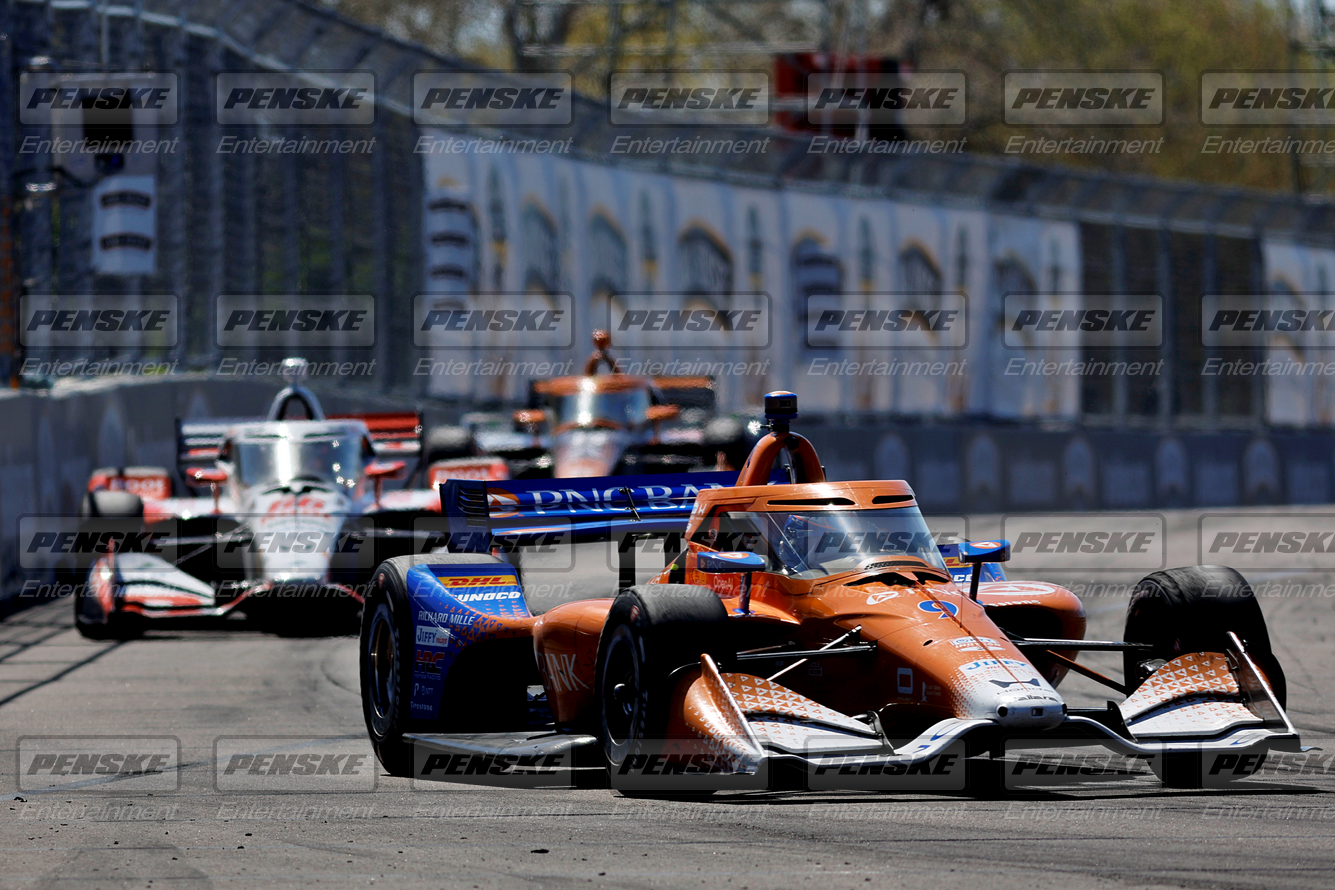
For long-time followers of the NTT IndyCar Series, the script rarely changes when it comes to long-term driver Scott Dixon. No matter how compromised a weekend may appear, the six-time champion almost inevitable finds a way to extract the maximum and achieve good points by Sunday. At this year’s Java House Grand Prix of Arlington, that skill was once again on full display. In a race where Dixon climbed from 20th on the grid to eighth, he gave one of the most outstanding performances in the month of March.
Turning Disadvantage Into Opportunity
On paper, Arlington will be remembered for its spectacle at the front, where Kyle Kirkwood claimed victory ahead of Álex Palou and Will Power. The race itself delivered everything. Be it the constant overtaking opportunities of a street circuit, multiple race leaders and late-lap drama. Yet beyond the podium, Dixon’s performance stood out for a very different reason. It was not defined by headlines, but by control, patience and precision.
The New Zealander’s disadvantage had been firmly established by Qualifiying. A disrupted Saturday session that was compounded by limited running on the softer tyre and interrupted by a red flag. This left the Chip Ganassi Racing driver buried deep in the field. Around a tight and not-so-forgiving street circuit, starting at the back is often in motorsports a sentence to mediocrity. For Dixon, in this close IndyCar field, it became the foundation of a calculated recovery drive.
What followed was a race built not on luck, but on execution under pressure. While others relied on track position or well-timed cautions, Dixon committed to a four-stop strategy that demanded consistency across all 70 laps. Crucially, the race never unfolded in a way that naturally favoured him. The early cautions his team had hoped for simply did not arrive, forcing him to carve his way forward through rhythm and race pace alone.
Pace When It Mattered Most
His progress through the field was steady rather than a big spectacle, but that only possibly made it more impressive. Dixon completed each lap cleanly while managing traffic, tyres and strategy without error. The 45-year-old finished the race distance in 1:55:52.8957 hours, still maintaining an average speed of 98.946 miles per hour. The defining moment, however, came late in the race.
On lap 66, deep into his final stint, Dixon set the fastest lap of the race with a 1:33.9902, the only driver to break into the 1:33 range. It was a striking reminder that even from the back of the midfield, he possessed front-running pace and a team that delivered four consistent pit stops. Strikingly, it highlighted his ability to deliver speed exactly when it counted.
A Weekend That Refused to Cooperate
That pace had been masked earlier in the weekend for his car, while teammate Álex Palou found it from the start. A spin in practice, followed by light contact, disrupted his preparation, while qualifying never offered the clean window required to demonstrate the car’s true potential. By his own admission, the situation left him exposed and playing catch-up from the outset.
Yet it is precisely in these circumstances that Dixon continues to build himself. Where others may falter when a weekend slips away, he reset, recalculated and rebuilt. Arlington was not about fighting for victory; it was about maximising the possible, and few do that better.
Defining a Month Through One Drive
Arlington didn’t happen out of nowhere. It capped off a month that showcased both Dixon’s resilience and consistency. The season opened with frustration in St. Petersburg, where he started at the back of the grid in 16th and gambled on that early pit stop. At the start, luck and skill seemed to be on the driver’s side. He climbed into the Top 10 before a loose wheel, due to a wheel nut problem, ended his race prematurely.
Phoenix saw him start 15th on the grid, yet he climbed into the Top 10 by race’s end, and at Barber, he started 13th and again finished strongly in the Top 10. Arlington provided the crowning example: from a compromised starting position, Dixon executed a masterclass in recovery, turning what could have been another mid-pack result into a commanding eighth-place finish.
Across the month, the pattern was clear: qualifying was a challenge. Still, all his races show how, when luck is on his side, the alternate strategy his team and him use pays off compared to the rest of the grid.
Why Dixon Still Stands Out
By mid-March, Scott Dixon was outside the top 12 in the standings. By the end of the month, he had moved into the top 10 with 85 points. He now sits just 13 behind fellow Honda driver Marcus Armstrong. Others may shine brighter on a given Sunday. Dixon’s strength is different. His ability to recover and rebuild remains unmatched. His drive from P20 to ninth, P8 after penalties, in Arlington was more than just a good result.