
The last article in this series looked at the Road to MotoGP junior series. After the success in the junior series, where else can they go? Let’s look at the intermediate series and where riders could go to improve and gain experience from their junior careers.
One route of that is through national championships.
MotoAmerica
MotoAmerica consists of nine rounds with three races per round. Riders must be between 18 and 55 years old. The biked must be 750cc up to 1000cc, 4-stroke, 3- and 4-cylinder over 850cc up to 1200cc, 4-stroke, 2-cylinder. The bikes reach 210+ horsepower.
Last year’s champion, Cameron Beaubier, goes into this year’s championship as the favourite, with Bobby Fong chasing him for the championship.

However, going to national racing is not the only route riders are looking to improve their career. Some riders make the transition into world championships. This is usually the more favoured route, but also the more expensive route. Riders who perform well usually get noticed faster, but bikes and transport cost more.
World Sportsbike
A new option for this year is World Sportsbike. This class consists of six bikes: the Kawasaki ZX-6R, the Kove 450RR, the Yamaha R7, the Triumph Daytona 660, the Aprilia RS 660, and the Suzuki GSX-8R. It will be interesting to see how the 33-rider field works during the season. This class is brand new for this year, replacing World Supersport 300.
A class like this has already been running alongside the British Superbike races and has been very successful. Will the change also work in World Championship racing?

FIM World Women’s Circuit Racing
Another championship is the FIM World Women’s Circuit Racing. The class, entering its third season, is a championship for women looking to improve their racing careers. The 24 riders all have identical Yamaha R7S to race across six rounds, two races per event.
Last year’s champion, María Herrera, is back on the grid this year to try to keep her title against Beatriz Neila and teammate Chloe Jones.

World Supersport
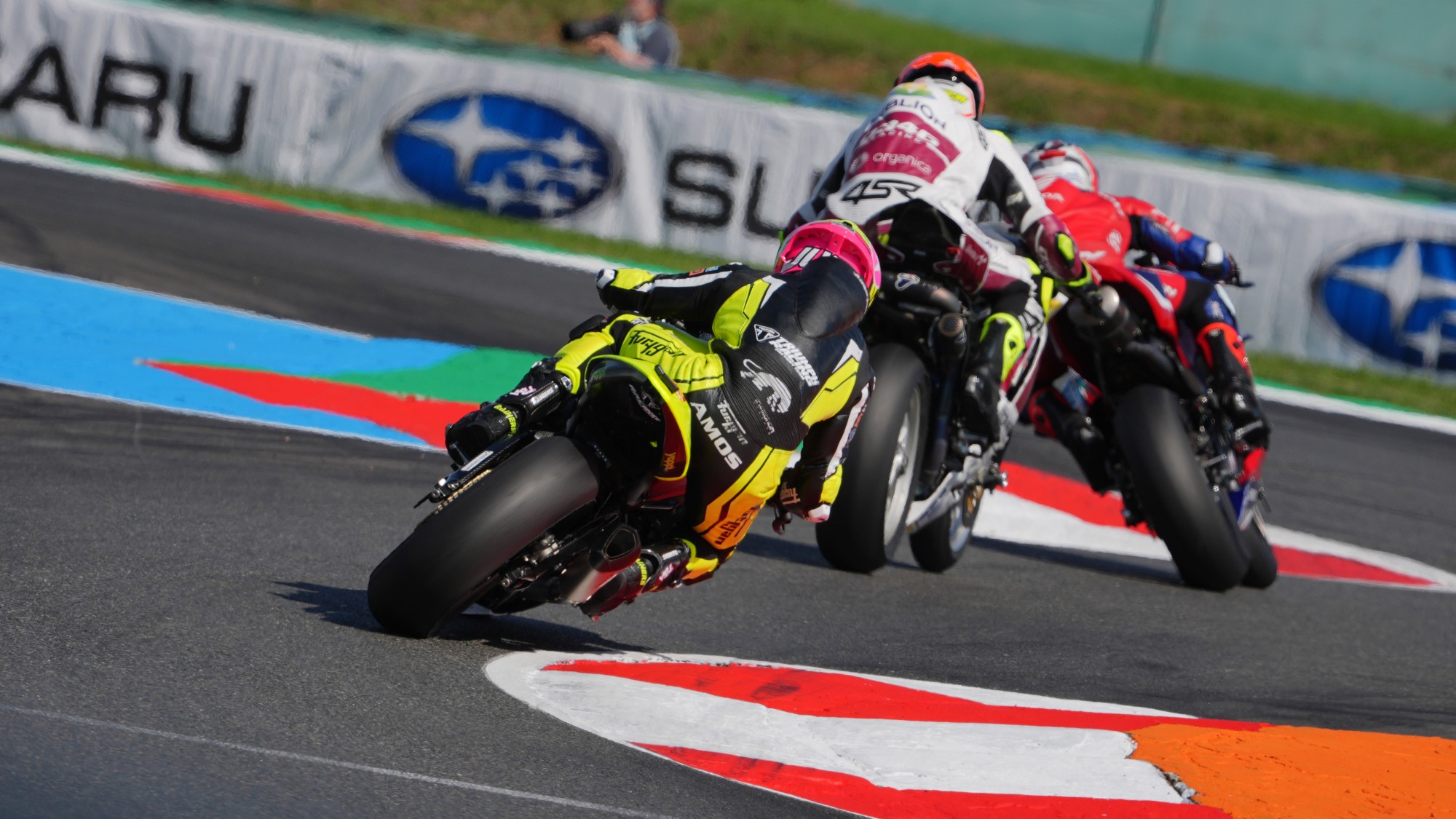
Another option for all riders is the World Supersport Championship. Competing over 12 rounds and two rounds per race. The class is running under the new generation rule set. The class used to be 600cc engines, but with manufacturers not making bikes like that, the class now allows engines between 600cc and 990cc, all electronically equalised to produce 130 brake horsepower.
Last year’s champion Stefano Manzi has moved on to World Superbikes, leaving riders like Can Öncü, Tom Booth-Amos, and Dominique Aegerter to fight for the title.

What is next?
Going into classes like these can help people develop their race craft for when they get into the top division of racing. Championships like this help riders not only sharpen their skills but also get used to faster motorbikes, so they are ready when they move into the top classes.