
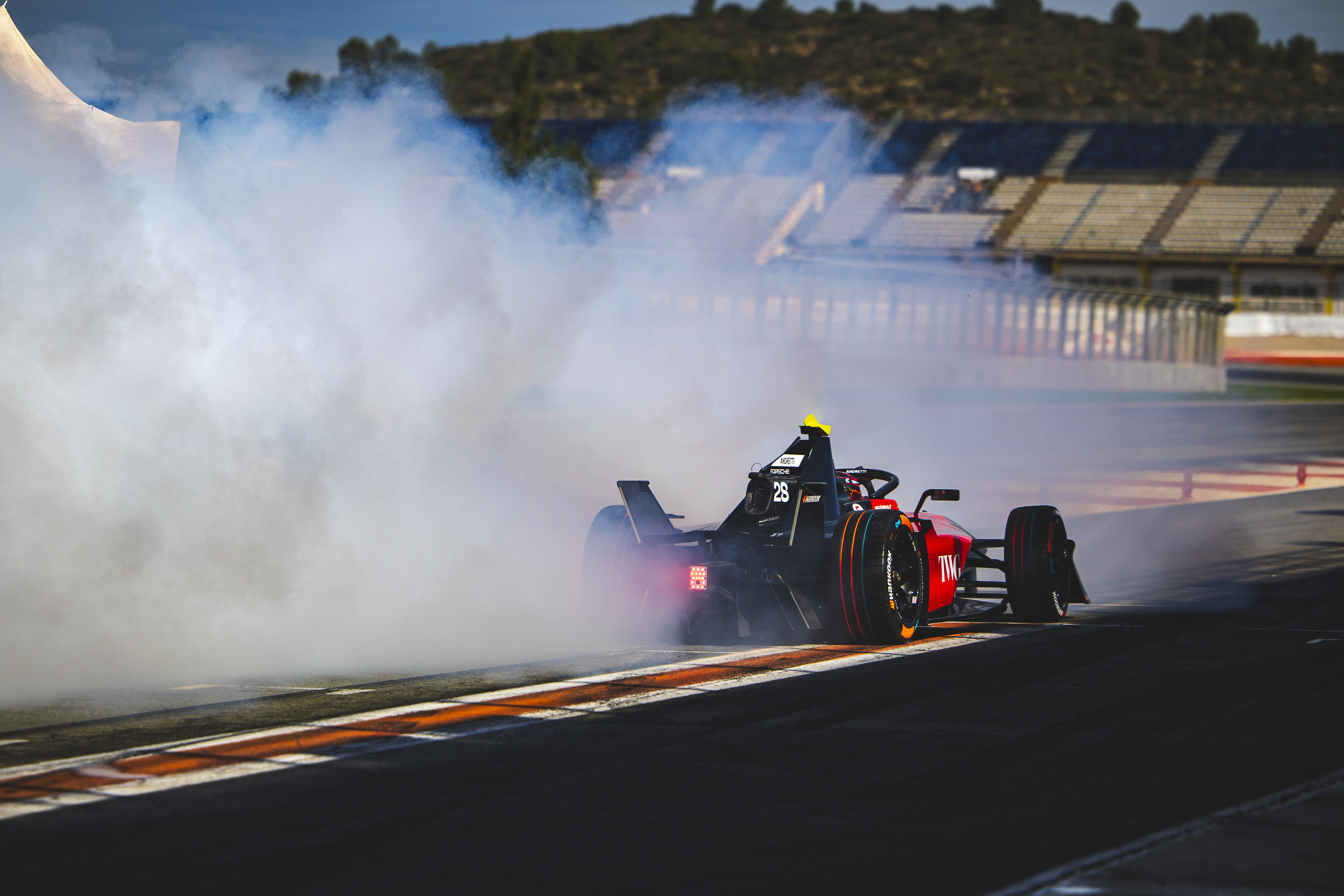
We all know the hardest part of the year has arrived: the Formula 1 winter break. A dark stretch of three long months where no fast cars drive in circles around the racetrack. But fear not, because in this quiet period, there’s still a spark of excitement. Stepping in to save the day is Formula 1’s younger, more adventurous sibling: Formula E.
An all-electric single-seater FIA World Championship, Formula E delivers a greener kind of vroom during the winter break and far beyond. And while many may criticise the quieter championship, there is far more to celebrate. In just 12 years—a series literally built on a napkin—Formula E has grown into a complex and dynamic championship shaped by bold innovation and constantly evolving regulations.
This guide breaks down what you need to know so you can fully enjoy the first race this weekend.
What Formula E Is
Formula E is an all-electric motorsport series racing primarily on temporary street circuits in major cities worldwide. Since its launch in 2014, it has become a technologically advanced, strategically demanding form of racing that showcases electric-vehicle innovation while providing intense, wheel-to-wheel action.

All cars run a spec chassis, but teams can develop their own motors, inverters, rear suspension and software—meaning efficiency and energy management matter just as much as raw speed. Sustainability sits at the heart of the championship, from using renewable energy at events to cutting freight emissions. It also supports educational programmes such as FIA Girls on Track and community initiatives through the Better Futures Fund.
How Drivers Join Formula E
To compete, drivers must obtain an FIA e-Licence, which requires completing a training session on electrical safety and sporting regulations. They must also hold at least 20 Super Licence points accumulated over the last three years, or previously have held a Super Licence, or have participated in three Formula E events.
Candidates without the required points can be accepted at the FIA’s discretion based on single-seater experience. A rookie is defined as a driver who has never raced in an E-Prix until the end of their first season or until they have competed in two E-Prix across different seasons. This year, Season 12 will feature just one rookie: Pepe Martí, as Felipe Drugovich previously raced in Berlin in 2025.

Formula E does not run its own feeder series, so talent commonly enters from Formula 2, Formula 3, GT and sports car racing, or even from Formula 1. Rookie practice sessions, collective tests and manufacturer development days are crucial opportunities—especially because, like in Formula 1, testing is tightly restricted.
How a Race Weekend Works
A typical Formula E weekend is compact. During a single-header, Friday features the first Free Practice session, while Saturday includes FP2, qualifying and the race. At double-headers, Sunday mirrors Saturday’s schedule. Free Practice gives drivers 40 minutes for the first feel for the narrow and unpredictable circuits.
Qualifying
Qualifying starts with two timed groups, split by the Drivers’ Championship standings. The four fastest drivers from each group progress to the Duels, where they race head-to-head for the Julius Baer pole position, earning three bonus points. Drivers unlock an extra 50 kW in the knockout rounds.

© Sam Bagnall / Formula E
Grid positions are assigned based on the polesitter’s group: those in the same group fill the odd slots; those in the other group take the even ones. If qualifying is cancelled, Free Practice times set the grid.
The Race
Races run to a fixed number of laps, with extra laps added for full-course yellows or safety cars. Strategy hinges on energy management, Attack Mode, and the newly introduced PIT BOOST, available once per double-header weekend, offering 600 kW of power when the cars are at 40–60% battery charge.
Attack Mode requires drivers to arm the system, move off the ideal racing line and pass through the activation zone. This season, failing to take the full Attack Mode time is no longer penalised. The Formula E Hankook tyres must last the entire E-Prix.
| Finishing Position | Amount of Points |
| 1st | 25 |
| 2nd | 18 |
| 3rd | 15 |
| 4th | 12 |
| 5th | 10 |
| 6th | 18 |
| 7th | 6 |
| 8th | 4 |
| 9th | 2 |
| 10th | 1 |
Teams and Drivers in Season 12
Season 12 presents a grid that blends experienced protagonists with talented new arrivals. The seven manufacturer teams:
- Nissan Formula E begins the season with the reigning World Champion, Oliver Rowland, partnered with Norman Nato
- Jaguar TCS Racing fields Mitch Evans alongside António Félix da Costa
- Porsche Formula E will start this season with Pascal Wehrlein and Nico Müller
- Mahindra Racing employs Edoardo Mortara and Nyck de Vries
- Citroën Racing arrives with Nick Cassidy and Jean-Éric Vergne, forming one of the most experienced pairings in the field
- DS Penske runs Taylor Barnard with Maximilian Günther
- Lola Yamaha ABT Formula E brings Lucas di Grassi and Zane Maloney
The grid also includes three customer teams:
- Andretti Formula E (Porsche) presents Jake Dennis and the highly anticipated Brazilian driver Felipe Drugovich
- Envision Racing (Jaguar) races with Sébastien Buemi and Joel Eriksson
- CUPRA Kiro (Porsche) features Dan Ticktum alongside Pepe Martí
Legends of Formula E
Despite being just over a decade old, Formula E has already built a notable lineage of influential drivers. Sébastien Buemi, the Season 2 champion, stands out as one of the most enduring competitors. Jean-Éric Vergne remains the only double champion in the history of the series and continues to be a central figure. Lucas di Grassi, who captured the Season 3 title, helped define Formula E’s early identity through his relentless consistency and outspoken advocacy for electric motorsport.
Alongside these current stars, the championship has produced several former icons who no longer race in Formula E but whose impact is still strongly felt. One of them is Nelson Piquet Jr, who became the inaugural champion and set the tone for the early years of the series.

Sam Bird was one of the most successful and recognisable figures across multiple eras, celebrated for his aggressive racecraft and longevity, ending his Formula E career after NEOM McLaren left the series after Season 11. So many drivers each added distinct chapters to the evolution of the series, making the sport better through participating.
Season 12 Storylines
The 2025 Google Cloud São Paulo E-Prix promises a dramatic season opener. The fast, bumpy, slipstream-heavy 2.933 km circuit features long straights, tough braking zones and no shortage of chaos. Last year, Mitch Evans produced an unforgettable comeback win after multiple red flags.

Oliver Rowland begins his title defence at a venue where he displayed a weaker season start last year. While Felipe Drugovich carries the hopes of the home crowd as Brazil welcomes a long-awaited new home hero.
Why Formula E Matters
Formula E occupies a unique position in global motorsport. It demonstrates that elite racing can serve as a platform for technological progress and education while prioritising environmental responsibility. With renewable energy, reduced freight emissions, and urban accessibility, it sets a model for sustainable international sport.
It also remains a far more affordable option than Formula 1, giving more fans access to top-tier racing. For those not able to join trackside, all Free Practice sessions are streamed live on Formula E’s website. Season 12 now has the opportunity to showcase how the next chapter of electric racing can continue to evolve. And proving to you that it is a motorsport series you shouldn’t miss!