
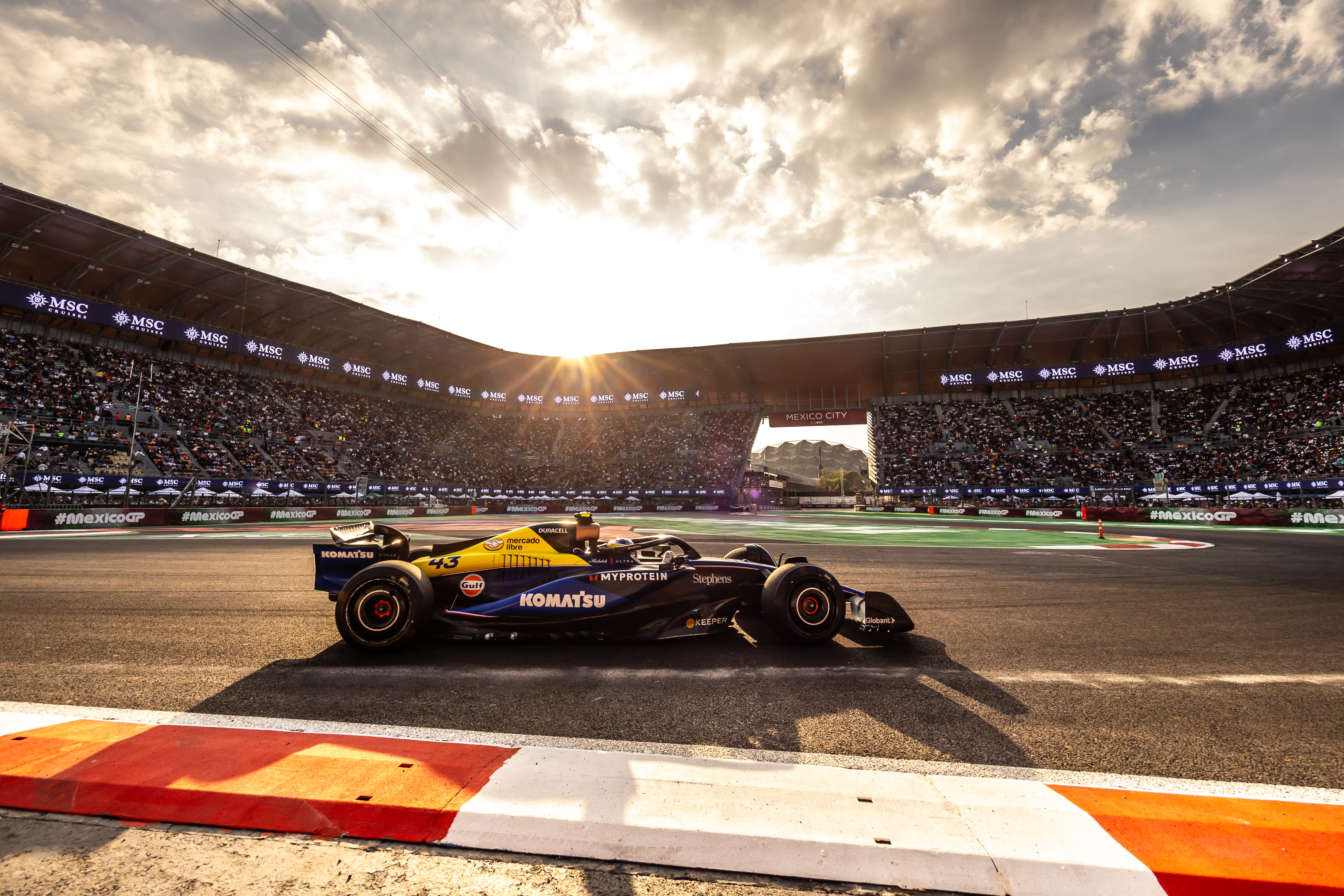
Formula 1’s trans-American swing continues this week as the paddock heads south from Austin to the vibrant heart of Mexico City for Round 20 of the 2025 FIA Formula 1 season. The Autódromo Hermanos Rodríguez, nestled more than 2,200 metres above sea level, promises an atmosphere as rarefied as the air itself—both literally and figuratively.
Few crowds on the calendar can rival the passion of Mexican fans. From the grandstands that vibrate with song to the Foro Sol stadium section that transforms into a cauldron of noise as cars sweep through, the Mexico City Grand Prix is a celebration of motorsport unlike any other.
A Leap in Compounds … Again
Just one week after Pirelli’s bold compound skip in Austin, teams face a similar curveball in Mexico. For this weekend, the Italian manufacturer brings the C2 (Hard), C4 (Medium) and C5 (Soft), once again leaving a gap between the hardest and middle options.
It’s a conservative choice for the C2, which offers longevity but minimal grip compared to the softer tyres. The C4 and C5, by contrast, promise speed but at the cost of higher degradation, especially on a surface notorious for low grip and heavy sliding.

“The delta between the compounds here is significant,” explained Pirelli’s Motorsport Director, Mario Isola. “Teams will have to find the right balance between performance and tyre life, particularly with the unique challenges of altitude.”
The thin air at this elevation means cars produce less aerodynamic downforce, amplifying tyre wear and increasing the likelihood of graining, a familiar sight in Mexico. As a result, the decision to commit to a one-stop or two-stop strategy could hinge as much on tyre management as outright pace.
Last year, most teams opted for a straightforward medium and then hard one-stop race. With the soft compound only expected to appear for qualifying and a few late bids for pointless, fastest laps. This time, with improved resistance to graining in the current tyre construction, the softer compounds could see more action, but only for those bold enough to risk a second stop.
Testing and Transition
While Sunday’s race will mark the climax of the Grand Prix weekend, it also serves as a closing chapter for Pirelli’s 2026 tyre development campaign. Following the race, the company will conduct its final two-day test at the circuit with Sauber and Mercedes, focusing on the validation of its new, slightly narrower 18-inch tyres.
This final phase caps a global programme spanning 15 test sessions across seven countries, from Barcelona to Silverstone. The findings from Mexico will shape the definitive specification to be signed off in December ahead of next season.
The Track at 2,200 Metres
The Autódromo Hermanos Rodríguez, 4.304 km long and run over 71 laps, is one of Formula 1’s most distinctive challenges. Its thin air reduces drag, allowing for extraordinary top speeds of over 360 km/h on the 1.2 km main straight. It simultaneously robs cars of downforce. Drivers must race delicately through the slow, technical middle sector while keeping their tyres alive through long, sweeping corners and heavy braking zones.

Therefore lock-ups into Turns 1 and 4 are common, particularly early on, when tyres and brakes struggle to reach optimal temperature in the thin air. And while the layout may not boast the famous Peraltada curve of old, the final sector through the stadium is a visual and emotional crescendo that few circuits can match.
A Young Crowd and a Young Field
Adding a unique twist to the weekend, nearly half the grid will be replaced by rookies in Friday’s opening practice session. With teams rushing to meet Formula 1’s mandatory young driver running before season’s end, Mexico will see a flurry of new faces.
Ferrari’s Lewis Hamilton will hand his SF-25 to endurance driver Antonio Fuoco, while McLaren’s Lando Norris steps aside for home hero Pato O’Ward—certain to receive one of the loudest cheers of the weekend. Red Bull’s Max Verstappen makes way for 18-year-old Brit Arvid Lindblad, and several others, including Frederik Vesti (Mercedes), Luke Browning (Williams), and Jak Crawford (Aston Martin), will also get their chance to impress.
For the fans, it means an FP1 packed with promise; for teams, a session of delicate data-gathering in thin air.
Altitude, Heritage and Heat
The Mexico City Grand Prix remains one of Formula 1’s most iconic events. It’s a race that has tested generations of champions. Since its first running in 1963, the event has evolved with the sport itself, from the perilous curves of the old Magdalena Mixhuca layout to the modern, reimagined circuit we race today.
Verstappen remains the master of Mexico, with five victories to his name, while Ferrari continues its strong qualifying form here, having taken pole in both 2023 and 2024. It was also at this circuit that Hamilton sealed two of his world titles and holds the record for most podium finishes, underscoring its place in modern Formula 1 lore.
Viva México
The Autódromo Hermanos Rodríguez always delivers theatre: from thundering straights to stadium roars. Between the thin air, bold tyre choices, and a grid infused with new blood, the 2025 Mexico City Grand Prix looks set to be as unpredictable as it is unforgettable.
Whether it becomes another one-stop exercise in patience or a two-stop sprint of survival, one thing is certain: in Mexico City, the passion is never in short supply.