
While the beginning of the Canadian Grand Prix may have started slow, tyre strategy emerged as a key point of struggle amongst several big teams.
Choosing a two-stop strategy, yet struggling to make a significant difference in results, several teams saw tyre degradation and management as a focal point.
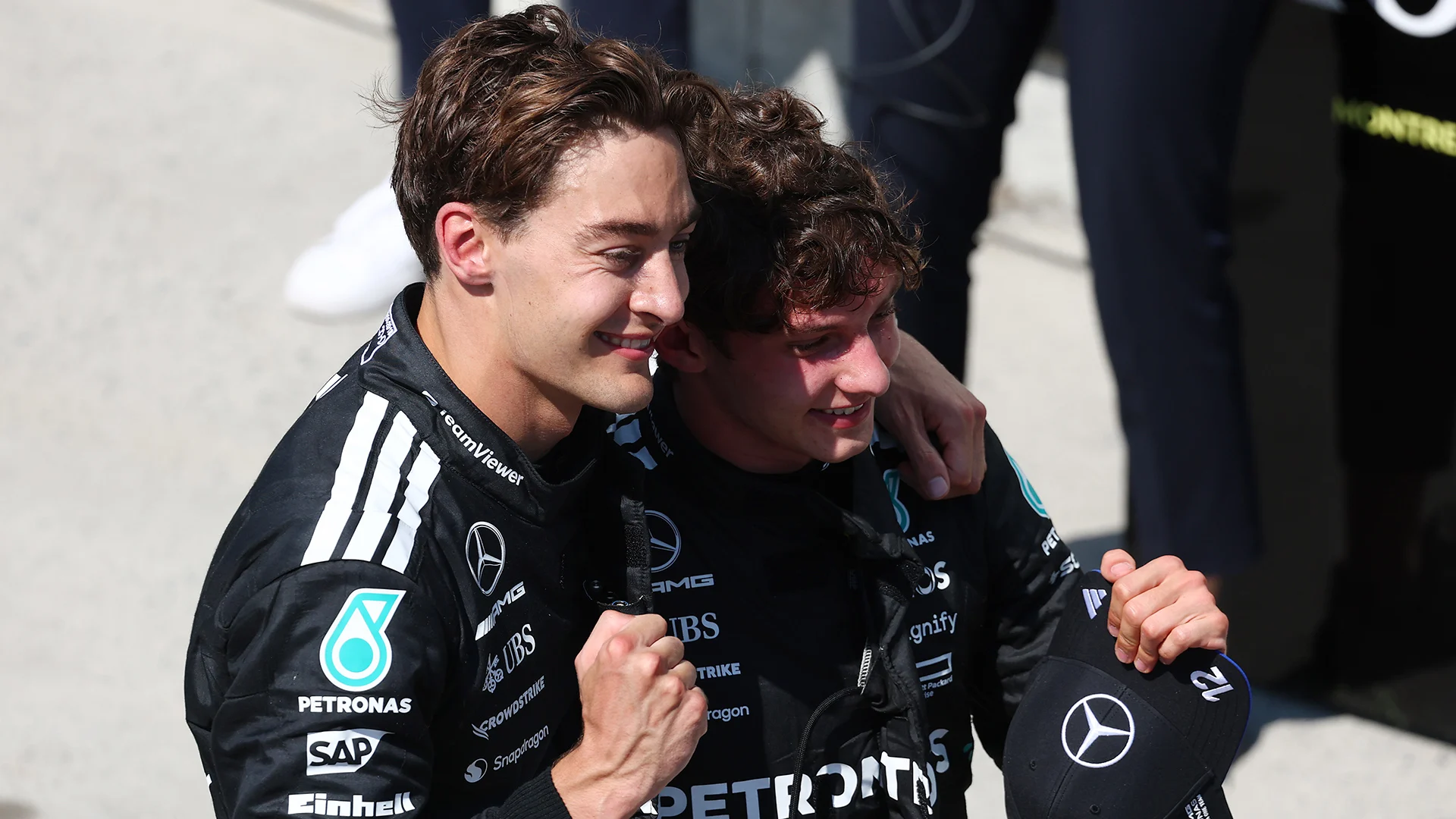
In the end, Mercedes emerged victorious as George Russell converted a pole into his fourth win, and Kimi Antonelli became the third youngest driver to step on the podium.
Here are some teams and how poor strategy impacted their drivers.
Charles Leclerc – Scuderia Ferrari
Charles Leclerc appeared at odds with race engineer Bryan Bozzi and the Ferrari pit wall regarding tyre strategy.
Initially, Leclerc optimised his hard tyres and even led the race at one point, when his race engineer said they’re going for “Plan B,” Leclerc responded with “Plan C.”
Starting the race on hard tyres, he felt confident enough to pursue a one-stop strategy. However, Ferrari opted for the two-stop approach and went against the drivers’ choice, putting him on the medium tyres at lap 28.
Leclerc wasn’t happy with this decision and didn’t hesitate to express his confusion over the radio.
“I don’t understand this choice”, he exclaimed.
Eventually he was bought in for a second pit stop during lap 53, where he switched from the medium tyres, and finished 5th.
Despite this, he noted that the one-stop strategy appeared effective for his competitors,
Alex Albon – Williams
Before he DNF’d, Alex Albon was struggling right from the first lap. He lost three positions early on after being forced wide onto the grass by Franco Colapinto,
The team originally planned on making the best out of a one-stop strategy, however, luck was not on their side, as Albon struggled with graining and tyre management.
Eventually, a power unit issue ended Albon’s race early.
In a post-race interview, Albon reflected on the difficulties encountered:
“The race was already over for us. I struggled on the first lap, and then we tried to make a one stop work, but with the graining today it was really hard to manage the tyres.”
His teammate Carlos Sainz fought hard on a one-stop strategy and bought the team one point in critical conditions, but believes the team couldn’t show their “full potential.”
Isack Hadjar – Racing Bulls
The French driver started on medium tires, facing a three-place grid penalty for impeding during qualifying. Unfortunately, they experienced severe graining and had a late pit stop, which dashed any hopes of scoring points.
Opting for a one-stop strategy, the team switched to soft tires just before the Safety Car, which ultimately cost them valuable time. They struggled to escape a DRS train that held them back.
“We didn’t really have much pace, and other cars passed us. We’ve been struggling with the car since the start of the weekend,” Hadjar stated to the media.
As strategy emerged to be an issue for several teams, the midfield saw a positive result with several drivers utilising a one-stop strategy in the 70 lap race and bringing home points.