
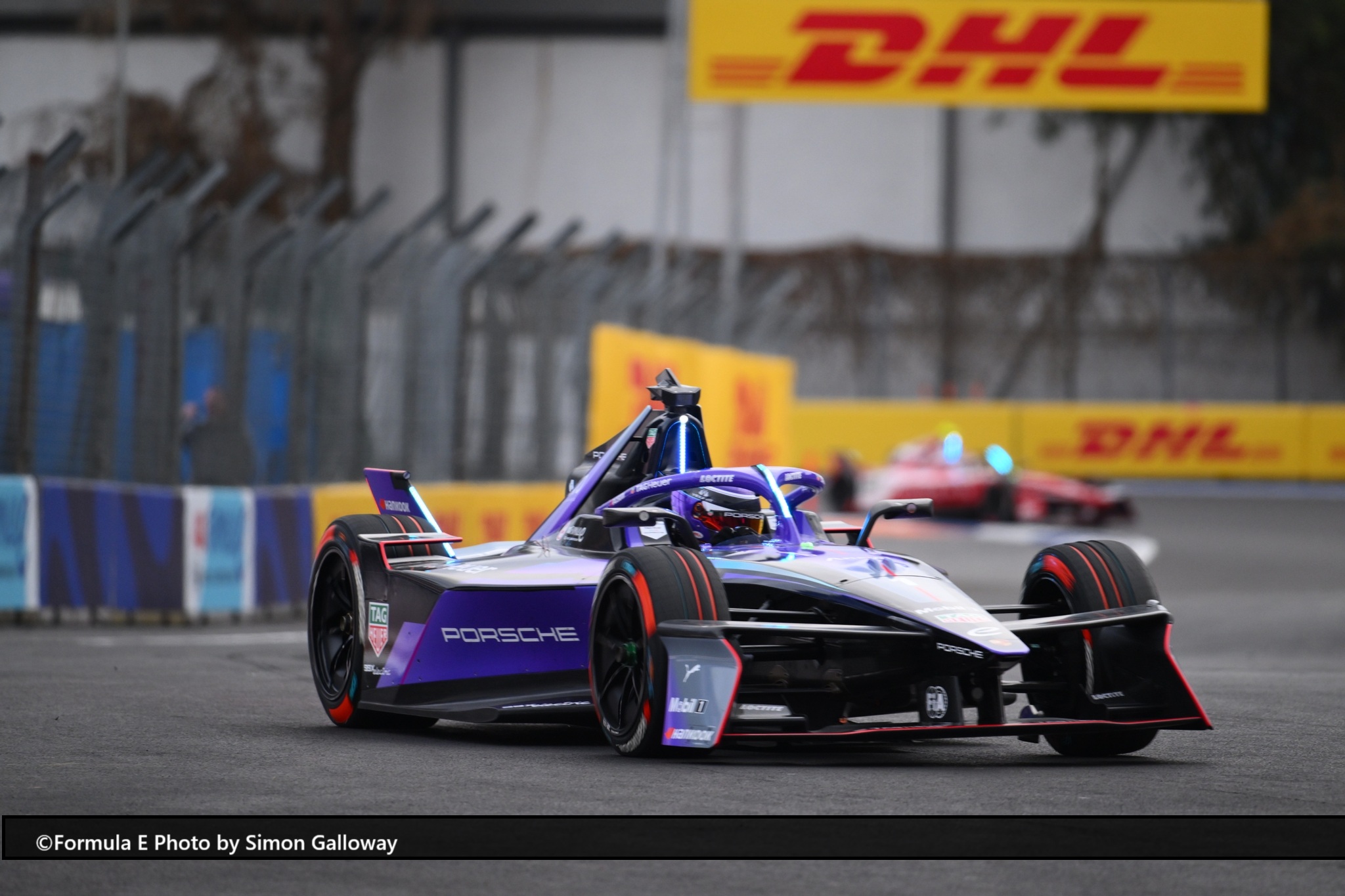
Pascal Wehrlein scored a dramatic and surprise victory in the Formula E Miami E-Prix, a race filled with close energy management, a flurry of Attack Mode penalties, and a crazy last-lap scramble. The Porsche racer, who started ninth on the grid, finished runner-up on the road but was handed the win after several leaders failed to take their mandatory Attack Mode timings ahead of the chequered flag.
Slow Start as Drivers Save Energy
The early stages of the race, held at Homestead-Miami Speedway, were marked by extreme caution. Nyck de Vries took the early lead from pole man Norman Nato, with most of the field more concerned with saving energy than racing. Lap times fell, over ten seconds slower than in qualifying, as drivers sought to stay in the slipstream and save battery life.
The top five settled into position: De Vries, Nato, Robin Frijns, Antonio Félix da Costa and a charging Jake Dennis, though Dennis was dropping back almost immediately. Taylor Barnard, practice dominant, got away well but dropped into the midfield group as strategies began to unfold.
First Movements and Tactical Manoeuvring
By lap 6, the lead changed again with Nato reclaiming the top spot. Energy levels were tightly grouped, with most cars between 77–79%. Da Costa had emerged as a quiet threat, with a 1.6% energy advantage over his nearest rivals. With both Envision cars in the top five, running alongside each other in a rare demonstration of team cohesion in Formula E.
Maximilian Günther was also making quiet progress, as DS Penske’s miserable afternoon continued, at the back with Vergne and Vandoorne.
De Vries’ Demise and Mayhem Brews
As the race hit its halfway mark, strategy took center stage. Attack Mode activations began, Buemi and Vandoorne among the first. De Vries, still in the mix, utilized four minutes of boost—but just as his Mahindra was set to battle for victory, it suddenly lost power in Turn 3. Though he restarted, the Dutchman dropped to 21st, his afternoon realistically over.
Sam Bird’s sharp overtaking and acclaimed energy management launched him into eighth. Da Costa’s efficiency dazzled as he took over the lead, looking more and more in control of the race.
Big Crash Triggers Red Flag
Lap 20 was a catastrophe. A multi-car accident involving Günther, Hughes, and Mitch Evans brought out the safety car and then the red flag. Hughes’ car had to be pulled out after it became stuck in the chicane, while Günther backed into Evans in the chaos—a comical but costly mistake of judgement.
Critically, da Costa had just activated his second, six-minute Attack Mode. The timing could not have been worse, as the red flag effectively neutralised his advantage.
Standing Start Sparks Final Sprint
At last, after a lengthy delay, the race resumed with four laps to go. Da Costa led the restart from Wehrlein, Mortara, Frijns, and di Grassi. However, several drivers still had untaken Attack Mode time—Rowland, Nato, Frijns, Cassidy, and Bird among them. They were obligated by the regulations to take the full amount before the race finish or incur penalty.
A restart from a standstill on lap 23 created absolute mayhem. Mortara briefly got the better of Wehrlein, but the German wasted little time in retaliating with a tidy overtake. He then took his own Attack Mode to snatch the lead from da Costa, whose energy shortage and lack of remaining boosts were terminal.
Da Costa Falls, Rowland and Nato Surge
Da Costa promptly dropped out of podium contention, passed in rapid succession by Frijns, Nato, and Rowland. Yet behind the on-track battle, a penalty cloud loomed large. Nato, Rowland, and Frijns had all failed to serve their full Attack Mode time.
Wehrlein, energy low but tactically perfect, held on. Da Costa clung on to fifth, his only hope now a post-race re-shuffling of the order courtesy of penalties.
Final Lap Chaos and Victory for Wehrlein
The final lap saw Nato rocket into the on-track lead with Frijns and Rowland chasing. But it did not make a difference. None of the three used their full Attack Modes. The chequered flag dropped with Nato crossing the finish first, but he had little to rejoice.
Pascal Wehrlein, after a rollercoaster race of defending, passing, and clever energy saving, took the official win after time penalties to his rivals. Lucas di Grassi, after a calm, clean drive in the Lola, was shuffled up to the runner-up spot. Da Costa, so dominant for so long, salvaged third after starting at the front.
Provisional Top 5 (Post-Penalty):
Pascal Wehrlein (Porsche)
Lucas di Grassi (Lola)
António Félix da Costa (Porsche)
Robin Frijns (penalised, dropped)
Norman Nato (penalised, dropped)
A Race Where Brains Beat Brawn
In a race where caution, brains, and timing outdid outright pace, Wehrlein took victory. It was a reminder that Formula E remains the most unpredictable title in motorsport. The Attack Mode system—complicated, controversial—again delivered a frenetic finish, but also rewarded those who kept their heads when others lost them.
The Miami E-Prix may not have started with a bang, but it finished with a strategic bombshell that no one saw coming.