
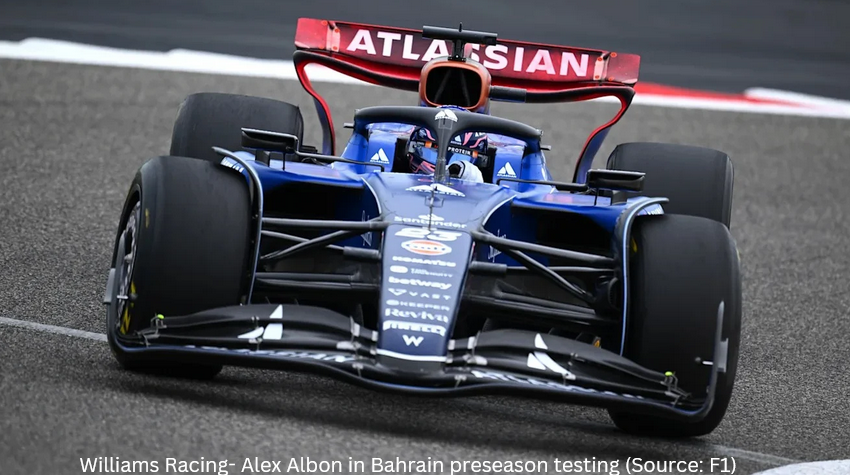
As planned, Formula One will see significant regulatory changes in 2026. Some of these changes will be implemented this season, including important rules regarding the fastest lap point, the Rookie Drivers Test and more.
- Fastest Lap Point Removal
To get an advantage over their rivals, teams nowadays regularly plan for a late pit stop in an attempt to claim the fastest lap point. Many fans may associate the withdrawal with the drama of the 2024 season, but we can be sure that the repeal of this bonus point will surely lead to a change in pit stop strategies. The point system itself will continue distributing points to the top eight drivers in sprint races and the top 10 drivers in grand prix races.
- Mandatory Rookie Drivers Practice
For rookie drivers who have only competed in two Formula One races in their career, the required FP1 running has been extended for 2025, guaranteeing double the track time throughout a race weekend. Each team has two cars, thus instead of the two times that were previously necessary, they will run their rookie drivers for the first practice session on a weekend four times a year.
- Driver Cooling System
In 2025, the FIA unveiled a cooling vest that is suitable for use in temperatures higher than 31°C as a result of the 2023 incidents that showed the impact of severe temperatures on drivers. In the event of a heat hazard, teams are required to install a driver cooling system, which raises the car weight limit. This technology, which comes in the form of a fireproof shirt with a pump, plumbing, and thermal store, gives drivers extra cooling.
- Flexi-Wings and DRS
Teams will have time to change as a result of the FIA’s decision to implement new load testing for both the front and back wings. The technical rules pertaining to DRS and flexible wings have been strengthened by the FIA, with a particular emphasis on the wings’ maximum opening and closing capacity. The minimal opening for the rear wing is 13mm. The front wing has a maximum of 15mm for the start of the season and a maximum of 10mm after the Spanish Grand Prix.
- Weight Limits
Due in part to the big V6 hybrid engines and the driver cooling systems, the minimum weight limit for Formula 1 vehicles was increased to 800kg (1,764lb) without fuel. The minimum weight for drivers has also increased from 80kg (176.4lb) to 82kg (180.8lb).
- Testing Old Cars
Following modifications to the Testing of Previous Car (TPC) rules, teams are now permitted to employ parts that have been used at least once during a race weekend. Currently teams are permitted to run in the TPC for up to 20 days, but their race drivers are only permitted to run in four of those days, for a total of no more than 1000km. Similar rule revisions apply to mule cars, with a maximum of 10 days allotted for 2026 tire testing. For 2026 testing, the second vehicle will be a modified mule car, but the Rookie Driver test will keep driving the current car. Since the tires will differ from the Pirelli rubber of 2025, teams will be able to test future aspects given this new setup.
- Qualifying Classifications
In light of the 2024 Sao Paulo Grand Prix, which raised many concerns about weather-related qualifying issues, a new rule stipulates that the race grid will be determined by the World Drivers’ Championship classification if the stewards decide that a qualifying session cannot start. The order from the previous session segment will be applied if more than one driver fails to establish a time in Q2 or Q3 otherwise the stewards will decide the grid order if the drivers’ championship order cannot be applied. To avoid any loopholes, it will also be permitted to start from the pit lane and participate in the formation lap.
- No Swearing Rule
Stricter regulations have been implemented by the FIA for Formula 1, which include fines and even race bans for repeated infractions as well as penalties for misconduct, profanity, offensive gestures, and political, religious, and personal remarks. Given the severe consequences, it appears that the GPDA was not notified in advance and seemed taken aback by these developments. Fines of up to 40,000€ for a first offense, 80,000€ for a second offense, and 120,000€ for a third crime within two years are possible under the rules. Although this rule has drawn a lot of criticism, the FIA’s position to maintain professional status in the sport has continued to be a heated topic. However, according to the regulations, the circumstances surrounding the misconduct will likely help determine the appropriate penalty.
With the approaching Australian Grand Prix and these significant regulatory changes, we can anticipate an entertaining season. It will be interesting to watch how drivers and teams adapt to these new changes. We are going to observe if these rules are maintained or changed for the 2026 season as the season progresses.