
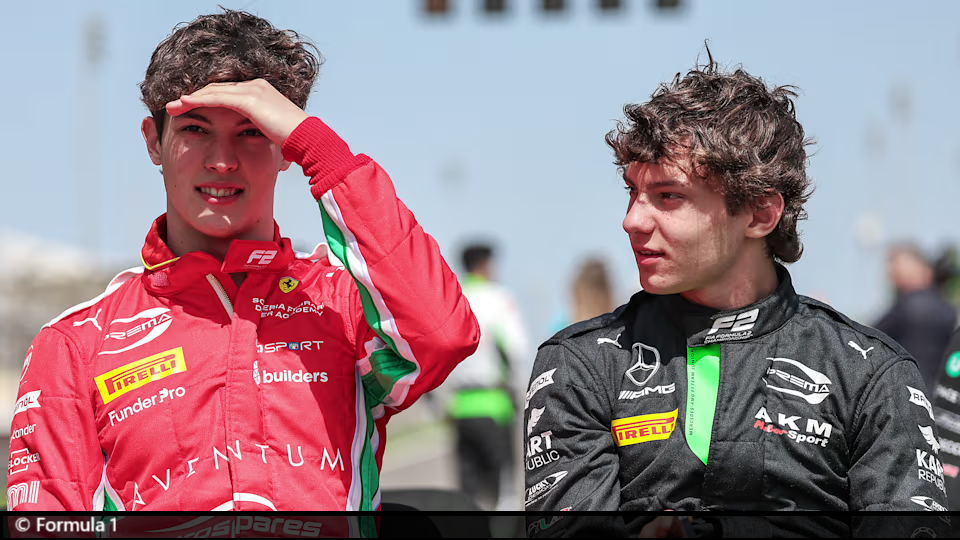
The 2025 F1 season start is a significant moment in the sport, with a new generation of young drivers coming onto the grid. After an unprecedented 2024 campaign where there were no full-time rookies, F1 has seen a new generation of drivers not only come into race seats but also vital reserve and development roles. But with only 20 highly sought-after seats available, the path to a full-time drive remains as dangerous as ever.
The Class of 2025
After a level 2024 rookie-wise, the 2025 season has ushered in a shake-up. The biggest newcomers are drivers who have gained experience in other championships and gained the backing of F1 teams via solid driver academy structures. Their careers have been varied, but the overwhelming majority follow the conventional path—Formula 3, Formula 2, and then, in the best of cases, into F1. But with lower and lower chances of winning an F2 title as an F1 certainty, other routes are now becoming popular.
Andrea Kimi Antonelli (Mercedes Junior Driver) – The Italian prodigy skipped F3 entirely, moving quickly through the junior ranks under the guidance of Janowski and Mercedes. His talent might have been evident in F2, but Prema wasn’t really a Championship Contender there in 2024. His real foot-in-the-door came with hard work at private testing and academy driver duties for Mercedes in 2024.
Oliver Bearman (Ferrari Academy Graduate) – The British racer first experienced F1 in 2024 when he replaced first replaced Carlos Sainz during the second Grand Prix of the season and then later drove the Haas for a Grands Prix weekend. His stellar performances made him a continued priority for Ferrari, eventually earning him a promotion to a permanent seat in 2025 in a Haas.
Jack Doohan (Alpine Academy Alumni) – Doohan had been knocking on the F1 door for years. His steady performances in F2 and FP1 sessions in 2023-24, and an dedicated testing program with Alpine, finally paid off when he got a seat for the 2025 season. A few look controversial on the role his manager, Flavio Briatore, may have directly played in getting his client a seat in the team he is an Executive Director. As we have seen in other cases, sometimes a bit of luck, and combination of circumstances can help the drivers to get the seat they deserve.
Liam Lawson (Red Bull-supported Prospect) – Despite a strong appearance in Super Formula and a few reserve driver moments F1 races in 2023-24. Lawson had to wait for his moment to rise to full-time status, after proving his talent a couple of races at the season end, driving for Vcarb last season. It was only this year that Red Bull bosses presented the reward opportunity, for him to grasp in 2025 as a repayment on his efforts.
Isack Hadjar (Red Bull Academy) – The French-Algerian young driver impressed in Formula 2 and gained the trust of Red Bull. Thanks to the juniors’ non-stop rotations, Hadjar’s promotion in 2025 came as the next logical step, contributing to further addition of youth in the grid.
Gabriel Bortoleto (McLaren-supported Driver) – The young Brazilian from F3 and F2 levels worked closely with McLaren and proved his worth in a number of FP1 sessions. His development fits with McLaren’s long-term strategic plan that involved offering him an opportunity for an F1 Stake seat in 2025.
All of them had different entry points to F1, but what their stories all refer to is one basic reality: a clean results in Formula 2 no longer suffice.
Waiting Game or Golden Ticket
With just 20 race seats to go around, most would-be F1 drivers are “promoted” to reserve or development positions, with the hope of getting a mid-season chance or being promoted eventually. Alpine taking the top spot with three reserve drivers sitting in their garage this season. This route is one with big uncertainty.
In 2024, Bearman’s occasional substitute appearances for Haas was the best-case scenario—promoting a last-minute call-up to a full-time seat. But for every Bearman, there’s a Frederik Vesti or a Felipe Drugovich, drivers who sat in reserve but never managed to gain full-time F1 careers.
Teams now value drivers who are part of their development programs rather than simply selecting the F2 champion. But even that is not enough, with driver academies often supporting two or more drivers of a similar age, competition is high. This is may be why F2 champions like Felipe Drugovich and Theo Pourchaire, who were unable to get an F1 seat, whereas drivers like Antonelli, with the complete backing of a veteran manufacturer, broke through traditional routes.
A Blessing or a Bottleneck?
Academy schemes, such as those from Red Bull, Ferrari, Mercedes, and Alpine, provide crucial financial and engineering backing for aspiring drivers. Yet they create bottlenecks, too. Red Bull’s aggressively cutthroat policy has put immense pressure on other talents, such as Liam Lawson and Ayumu Iwasa, to scramble for a single full-time position despite clear capability. Meanwhile, other academies take a more long-term approach. Ferrari’s methodical development of Bearman, including F1 practice sessions and strategic F2 campaigns, paid off. Mercedes’ handling of Antonelli might ensured he was F1-ready when an opportunity arose.
The modern Landscape of F1 Promotion
The 2025 rookie boom is symptomatic of a trend: Winning F2 is not the automatic stepping stone to the top anymore. While it’s still officially the feeder series, teams are ever more concerned with looking beyond pure championship victories, with test mileage, FP1 experience, and straight team integration being preferred options.
With F1 seats in short supply, potential drivers must now do more than simply win in juniors. They need to secure the right sponsorship, get themselves assimilated into a team, and seize opportunities when they arise. The 2025 rookies have been able to do that — but for those remaining on the waiting list, the route to F1 is as ruthless as ever.